Financing, Data and Equity Issues Challenge Early Childhood Education in Latin America and the Caribbean

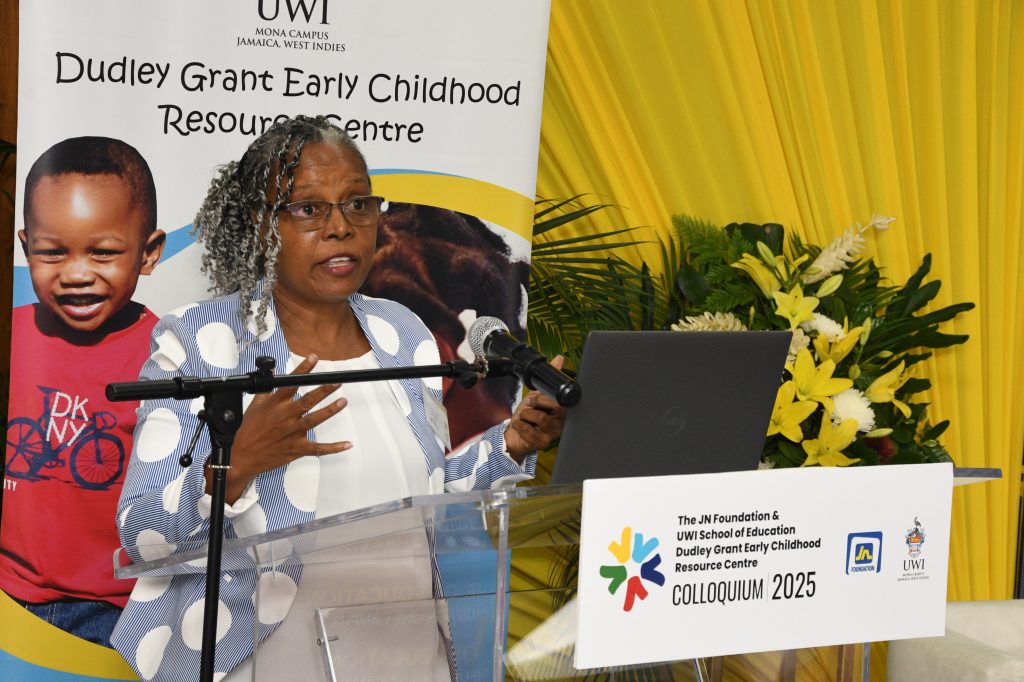
Strengthening early childhood education in Latin America and the Caribbean will require better financing, stronger data systems and more inclusive services, experts addressing a recent panel discussion on early childhood development in the region have said.

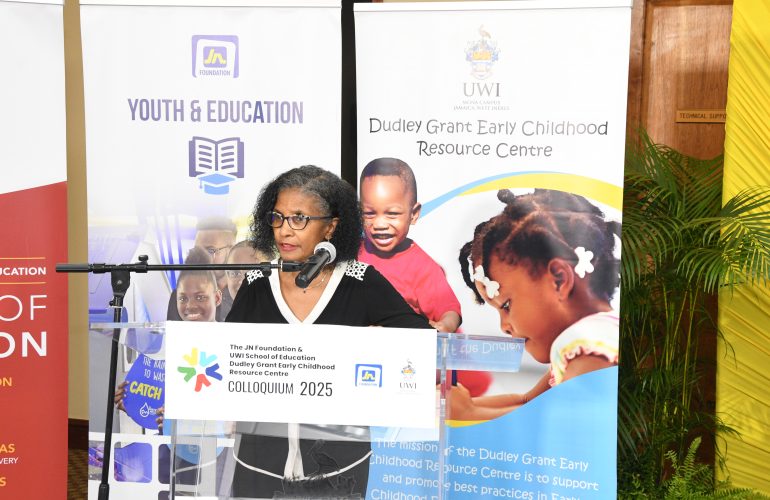
The panel of experts, which included specialists in global financing and early childhood education, were speaking at a recent colloquium organised by the JN Foundation and The University of the West Indies (UWI) School of Education in partnership with the Dudley Grant Early Childhood Resource Centre.

Dr Emre Ozaltin, lead economist for the Caribbean at the World Bank, noted that sustainable support for early childhood development (ECD) will require a diversified financing approach. He called for long-term financing strategies that foster coordinated support from development partners and the private sector to ensure continuity and effective services, even in the face of disasters.

“A diversified approach to funding in this area may be best – a combination of public budgets, targeted subsidies and innovative financing mechanisms, such as public private partnerships and targeted taxes,” he said. “Sustainable ECD financing is not a one-size-fits-all. Approaches tailored to social, political and economic realities, and critically, the flexibility to be able to respond quickly when disasters do strike are needed.”

He also underscored the need to invest in robust data systems, “to be able to observe the actionable information to improve the [existing] systems that we have.”

Professor Zoyah Kinkead-Clark, professor of early childhood care and education at the UWI School of Education, also emphasised the need for greater monitoring and evaluation in the sector to ensure programmes and actions are effective. Using the recent passage of Hurricane Melissa in Jamaica as an example, she also said by integrating evaluation with comprehensive support services, stakeholders can better meet the needs of children affected by crises to, among other things, ensure equity and continuity of care.

“We really need to be using that monitoring and evaluation to make the key decisions that are needed to guide the sector. We understand that many young children and their families are vulnerable, especially now, and this highlights the need to provide the kind of support they require. As a region, perhaps we can start thinking about ‘wrap-around services’ for our children and their families,” she said.

Adding to the conversation, Dr. Rebecca Tortello, education specialist at the United Nations Children’s Fund (UNICEF), also highlighted the need for improved learning environments, including more sensory based spaces and programmes in early childhood institutions (ECIs), to support children’s social, emotional, physical and cognitive development.

“It’s important that we find ways to replicate more of those spaces, following a model created by UNICEF with the Rockhouse Foundation at Savanna-la-Mar Infant Academy- one of the schools badly damaged by Hurricane Melissa. That model included clinical support through a partnership with the Ministry of Health and Wellness,” she said.

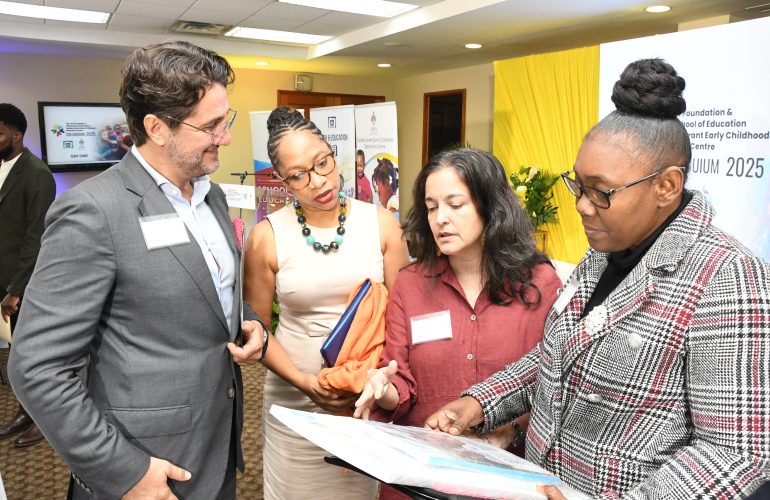
“You heard the Minister [of Education] speak about a research screening centre [to come] in Portland to complement the one that exists at Mico [University College]. We had about eight of the sensory or clinical spaces before the hurricane and we need more such support at the early childhood level to enable the necessary follow up along the National Early Screening Pathway, which starts with the Child Health Development Passport and moves through multiple assessments, including the Jamaica School Readiness Assessment developed by UNICEF and the UWI Department of Child Health and administered by the Early Childhood Commission (ECC). These sensory spaces, if strategically placed around the island, can be a possible way to bridge a key gap in the pathway,” she added.

Dr. Tortello said the way forward should also include improved infrastructure at ECIs, such as ramps and accessible toilets, to make facilities more inclusive. As she handed over the Pathway document, she also emphasised the need to expand access to teaching resources, including accessible digital textbooks (ADTs) now available on UNICEF’s Learning Passport Jamaica website at jamaicalearningpassport.org, as well as professional development programmes like the UNICEF-developed Inclusive Early Childhood Education course offered by the ECC and the Jamaica Teaching Council annually.

Dr Tracy-Ann Morgan-Smith, senior director of regulations and monitoring at the ECC, noted that along with ensuring that services are fully inclusive to accommodate children with disabilities and other special needs, improving the early childhood sector, particularly for Jamaica, will also mean reviewing legislation, implementing teacher licencing and enhancing disaster mitigation measures.

“We’re looking at putting in the legislation for system strengthening [to cater to] the whole aspect of the licencing and mandatory areas for teachers to do their professional development. Areas like toxic stress and the trauma children deal with after a disaster. That is critical. We also have to look at our climate resilience, how we now respond to education in emergency situations,” she said.

She noted that with the recent passage of Jamaica’s Data Protection Act and the evolving digital age, attention will also turn to how the early childhood legislation can protect children and others whose data is collected and used.

The two-day JN Foundation and UWI School of Education Dudley Grant Early Childhood Resource Centre Colloquium was held from November 27-28 at the UWI Regional Headquarters, under the theme: Let’s shape tomorrow, together. It brought together educators, policymakers and sector leaders to examine the state of early childhood education in the region and chart the way forward.
Read more

Embrace AI in Early Childhood Education with Caution – Tech Experts

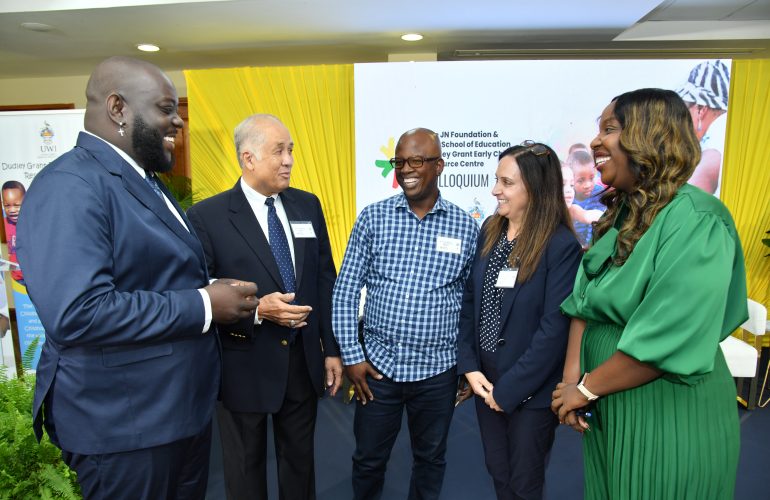
Photo Caption: Parris Lyew-Ayee (second left), Chairman, JN Foundation exchanges pleasantries with Dr. Tiou Clarke (left), lecturer at the University of Technology, Jamaica; Dr Ricardo Anderson (centre), lecturer in the Department of Computing, The University of the West Indies; Dr Dawn DiPeri (second right), interdisciplinary design leader and faculty trainer, and, Ava Marie Reid, curriculum development specialist. All were present at  a panel discussion at the recent colloquium on early childhood education hosted by the JN Foundation and the UWI School of Education’s Dudley Grant Early Childhood Resource Centre. The session, titled Opportunity or Distraction: Technology and Early Childhood Education, explored the role of AI in shaping the future of learning.

Educators with knowledge of artificial intelligence (AI) are urging their colleagues at the early childhood level to move past scepticism and embrace the technology as part of modern teaching methods. While advocating for its integration, they cautioned that young children should not have direct access to AI tools, emphasising the importance of developing their own analytical and critical thinking skills first.

The call came during a panel discussion at the recent colloquium on early childhood education hosted by the JN Foundation and the UWI School of Education’s Dudley Grant Early Childhood Resource Centre. The session, titled Opportunity or Distraction: Technology and Early Childhood Education, explored the role of AI in shaping the future of learning.

Dr Ricardo Anderson, lecturer in the Department of Computing, reminded the audience that AI is no longer a futuristic concept, but a technology embedded in everyday life.

“AI has become ubiquitous. Almost every device we use today, every digital piece of equipment, has artificial intelligence built in,” he explained. “What we need to do is ensure those tools are appropriate for the skills we want to develop. For example, if we’re focusing on motor skills, the devices we provide must align with those objectives. Many of these devices already use AI to enhance development and provide support mechanisms for teachers and students.”

While acknowledging that some AI applications may not be suitable for very young learners, Anderson warned against resisting progress.

“We cannot afford to have a generation that isn’t literate in using appropriate technologies,” he said. “Imagine if we had rejected calculators because we feared them. Technology changes how we do things, we must remain inclusive and ensure these skills are taught.”

Dr Taio Clarke, lecturer at the University of Technology, Jamaica, highlighted that scepticism often stems from limited exposure.

“Some of my colleagues still think AI is bad,” Clarke noted. “But I ask them, ‘Have you really interacted with it? Have you attended forums or explored what’s available before passing judgment?’ Let’s not rely on TikTok opinions; let’s engage with the technology ourselves.”

Dr Clarke also stressed that technology in early childhood education should complement holistic learning philosophies.

“Technology should follow the child as they grow, not the other way around,” he said, while advocating for play-based environments where teachers moderate sessions that balance free play, guided play, and hands-on activities.

Dr Dawn DiPeri, a New York-based interdisciplinary design leader and faculty trainer, echoed the need for caution with young learners.

“AI should not be directly for young children, they shouldn’t be interacting with AI tools at that age,” she said. Instead, she recommended using AI to assist teachers, particularly in content creation.

“In my school district, only tools that meet strict data security standards, known as ‘2D compliance’ are allowed,” DiPeri explained. “For policy, I suggest creating a clear list of approved tools. And when educators ask me to teach them AI, I start with pedagogy. I ask, ‘What problem are you trying to solve?’ Sometimes technology isn’t even the answer. Identify the pain points first, then find the right solution.”

Read more

Psychologists Call for ‘Re-Imagining Education System’ to Weather Growing Climate Threats

As Jamaica begins the road to recovery from the emotional, economic and infrastructural fallout caused by Hurricane Melissa, two education psychologists are calling for an urgent overhaul of Jamaica’s education system, starting at the early childhood level. They say the revamp will strengthen resilience and better prepare children and other stakeholders in the face of rising disasters.

Delivering the first of two keynote addresses on the opening day of the JN Foundation and The University of the West Indies (UWI) School of Education Dudley Grant Early Childhood Resource Centre Colloquium on the topic, Nurturing Well-Being and Building Resilience, the specialists, Professor Loraine Cookand Dr Sharline Cole, from the School of Education at UWI Mona, argued that Jamaica must reshape how it educates and protects children and their educators, both during crises and in the classroom before and after events.

They noted that as the country remains vulnerable to climate-driven disasters, children should be empowered as “agents of protection in disasters”. They called on authors to write textbooks and storybooks featuring disaster-management techniques so children can process risk and prepare through familiar characters and culturally relevant storytelling. “Present it so that children from as early as three can start understanding what vulnerabilities they will face in society,” said Professor Loraine Cook.

The education psychologists also stressed the need to continue improving school infrastructure across the country to be hurricane resilient, as many remain vulnerable to high-impact weather systems. They also pushed for a stronger national remote learning strategy, built on both online and offline methods to ensure continuity of education when schools are damaged or inaccessible. Citing an effective model from another disaster-prone country, Belize, Professor Cook said, “they utilise transistor radios to bring learning into the homes and I think that’s fantastic. It is so flexible, you don’t just rely on the internet.”

The Cuban Model

Beyond that, the psychologists urged education stakeholders in Jamaica to adopt international best practices that teach young children practical disaster preparedness skills. Using Cuba as a case study, Dr Cook shared how early childhood schools integrate a “culture of prevention” into their curriculum, preparing children for disasters. Using age-appropriate activities like drills, storytelling and themed games, the schools teach young children to recognise risks and react to emergencies with calmness and safety. She added that in primary schools, students from grades one to six also study their natural surroundings and learn about the environment through daily observation.

“The goal is for children to become agents of change by applying and sharing what they learn both within their families and across their communities,” Professor Cook shared.

Dr Sharline Cole added that in the redesign of the education system, children must be encouraged to express and validate their emotions as part of disaster recovery.

“Children have a say, and we should provide them with an opportunity to say what they feel and understand their emotions. Let them share exactly what is happening to them because if they don’t, it’s going to create problems later on. We have to listen to what they have to say and help them to talk about it,” she said.

The psychologists also highlighted that the call for transformation extends beyond students. While noting that teachers possess some psychosocial competencies, they highlighted that the concurrent demand of delivering curriculum content and addressing students’ traumatic experiences also present a significant challenge for educators. To ease this burden, they recommended that the Ministry of Education, Skills, Youth and Information partner with universities and counsellor-training institutions to implement a structured national internship programme. Under the proposal, mental health trainees would work alongside classroom teachers to provide socio-emotional support during instructions, helping to stabilise the classroom environment and improve academic performance.

Adaptive Education System Needed

Dr Sharline Cole

While underscoring the importance of supporting educators’ well-being, the specialists also called for a more adaptive education system, one capable of shifting quickly during emergencies and informed by data.

On the point of data, they urged the Office of Disaster Preparedness and Emergency Management (ODPEM) to collect and report on data relating to the effectiveness of the existing Guidelines for Child-Friendly Disaster Management and Response, to assist in policies reflecting the realities children face before, during and after disasters.

“Despite having the guidelines, the Government faces challenges in implementing child protection in emergencies as a central focus of their operations,” Dr. Cole said, citing a 2019 statement from the Caribbean Disaster Emergency Management Agency (CDEMA).

“We have the guidelines [but] are we putting them into action and does it end there?” she questioned. “We need the data to guide our practice, to make the appropriate implementation or to make decisions. If we don’t have that data, it’s difficult for us to make informed decisions, be able to plan and ensure we have a resilient society,” she concluded.

The two-day colloquium was held from November 27-28 at the UWI Regional Headquarters, under the theme: Let’s shape tomorrow, together. It brought together educators, policymakers and sector leaders to examine the state of early childhood education in the region and to chart the way forward.

Read more

A Volunteer’s Commitment to Jamaica’s Recovery

Pilar Ellington, a resident of St Andrew, has already participated in three relief efforts across western Jamaica, following the devastation caused by Hurricane Melissa. Driven by a deep sense of compassion and duty to those in need, she has committed to return as often as she can to provide further assistance to affected persons to rebuild their lives.

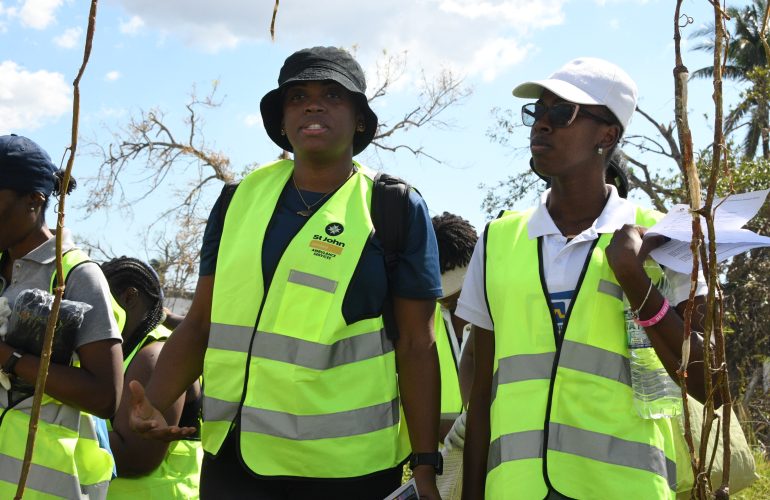
A dedicated volunteer and employee of the JN Group, Ms Ellington, was among the first to respond to the call for staff members to support the activities of the JN Foundation which partnered with the Jamaica Automobile Association and St John Ambulance Jamaica, to bring much-needed supplies and services to more than 1,000 residents in Trelawny and St Elizabeth.

“Our role included conducting medical and social surveys to assess the needs of residents, particularly their medical conditions, so that the medical team could provide immediate assistance where necessary. We also helped to distribute some 300 care packages,” she said, adding that the team provided telecommunication access through Starlink services, along with a generator that allowed residents to charge their devices.

Ms Ellington, a member relations officer at the JN Group, pointed out that she was deeply moved by the extent of the damage observed in the various communities.

“Pictures and videos really don’t capture the full reality of what we saw. Houses made of board and concrete alike, were completely destroyed, roads became riverbeds. It was heartbreaking to witness,” she related, adding that power lines were down, water and electricity were unavailable, and cell phone service was extremely poor.

“The situation is challenging. It felt like stepping back in time,” she said.

A moment that will always be etched in her memory was the assistance St John Ambulance Jamaica provided to a diabetic woman who had become critically ill.

“She was taken to the temporary field hospital in Black River due to the severity of her situation. It was gratifying to be able to be a part of an initiative which helps in this way. I could only imagine what might have happened if we hadn’t been there as volunteers to check in on the residents,” she reflected.

Ms Ellington also related that during the team’s outreach efforts in Lacovia, St Elizabeth, residents led them to the home of an elderly man whose house had collapsed during the hurricane while he was inside and how neighbors rushed to rescue him.

“When they got inside, they found him soaked and trembling in a small closet. One of the neighbors took him in, and they’ve been trying to reach his family,” she shared.

The residents, she noted, welcomed the relief support. Many expressed heartfelt gratitude for the aid which brought comfort in their time of great loss.

“They were very grateful for the help and care packages. Many elderly and vulnerable residents had lost their medication and were living with chronic conditions such as high blood pressure, diabetes, heart disease, and asthma. Some were even bedridden. They were extremely appreciative of the medical support and the assistance provided by the St John Ambulance Service,” she said.

“What stood out most to me was the community’s strength and positive spirit. Everyone remained hopeful and worked together to help one another,” she pointed out.

Speaking to the alignment of her work and innate nature of volunteerism, Ms Ellington, noted that her personal efforts is reflective of the mandate of the JN Circle, the activities for which she coordinates.

“JN Circle members are advocates for change and building stronger communities, and I truly believe in that mission,” she emphasised.

There are 16 local chapters of the JN Circle in Jamaica.  Overseas chapters are based in Toronto, Canada and London, England.

Over the years, Ms Ellington has made it her duty to give back in any way she can. 

“I live by the principle, ‘Do unto others as you would have them do unto you.’ One day, any of us could be the one in need of a good Samaritan. So, help because it’s the right thing to do, and because it feels good to make a difference,” she explained.

Ms Ellington stressed that restoring Jamaica requires collaboration at every level and the willingness of every citizen to play their part in the national recovery process.

“Helping others, whether in a big or small way, is a privilege. It’s deeply rewarding to know you’ve made a difference in someone’s life. Don’t think that what you have to offer isn’t enough because nothing is too small. Your voice, your time, your strength, and your prayers all matter just as much as physical donations.”

“We have a long road to recovery and rebuilding stronger and better will take everyone’s effort,” she maintained.

Read more