Navigating Rising Costs: Practical Financial Tips for Today’s Households

With prices climbing, from groceries to fuel, many households are feeling the strain. Inflation, higher interest rates and general economic uncertainty have made everyday budgeting more challenging than ever.

Rose Miller, financial education consultant with the JN Foundation, says the key to managing this period isn’t panicking; it’s planning.

“People can’t control inflation, interest rates or the price of fuel,” Mrs Miller stressed, “but what they can control is how they manage their financial resources to ensure they remain afloat.”

Her advice focuses on simple, practical steps that can help consumers reduce stress and stay financially grounded, even as economic pressure mounts.

Instead of worrying, she is encouraging households to redirect their energy towards what they can control, such as how they spend, borrow and save. Making intentional choices about these behaviours can have a meaningful impact on overall financial health.

Get Everyone on the Same Page

For households, communication is critical, she noted.

“If you’re in a household, you need to have a conversation and get everyone aligned and this is true whether there is a single or multiple incomes, but especially so for single income households.

“Everyone has to be on the same page about how money is being spent and the plan to get through this period.”

Without frank and honest discussions about the family’s finances, frustration and conflict can quickly arise, as a result of misaligned goals, behaviours and expectations, she added.

Revisit the Budget

“If budgeting has fallen by the wayside, now is the time to bring it back. We’re going back to the budget, and this time, we have to be very intentional,” Mrs Miller said.

That means closely examining daily spending habits, being more conscious about purchases, and paying attention to where and how money is being spent. Shopping smarter, exploring alternatives, and cutting back on non-essentials can help stretch household income further.

“Think about what you buy, where you shop, and whether there’s a more affordable option,” she advised.

And with interest rates likely to rise, Mrs Miller recommends exercising caution when it comes to new borrowing, especially for large purchases.

“This is not the time to rush into major loans if you can avoid it,” she advised. “Higher interest rates mean higher monthly payments, and more pressure on the budget.”

For those already struggling under the weight of existing debt, however, there may be relief options worth considering. She suggested debt consolidation as one possible strategy.

“If debt is already strangling your finances, consolidating could provide a lifeline,” she explained. “By extending the repayment period, you would be able to reduce your monthly payments and create some breathing room.”

Mrs Miller emphasised that financial stress doesn’t just come from money, but oftentimes from uncertainty.

“This is going to be a trying time for many people,” she stressed, “but with careful planning, you can reduce stress and put yourself in a better position to cope.”

Small steps taken now, adjusting spending, talking openly about finances, and managing debt responsibly can make a significant difference to our outcome.

“The goal isn’t perfection. It’s survival and stability and with the right approach, households can navigate this period of economic uncertainty with greater confidence,” Mrs Miller added.

Read more

Two Jamaicas, One Childhood: A Day in the Life of Urban and Rural Childhood

In a rural rafting community of Berrydale District in Portland, the day starts at the river. Before school and chores, children are already absorbing the sights and movement of the water: tourists drifting past on rafts, neighbours greeting each other, and adults turning the shoreline into a workplace. For some families, the river is also a way to earn.

Montel Hill-Bryan, Lead – Driving Academy at the JN Foundation

Montel Hill-Bryan, Lead – Driving Academy at the JN Foundation, remembers how he and his brother used to pick yellow marigold flowers and tuck them into a drink bottle and weigh them down with a few pebbles. Then they would swim out to meet the rafts as tourists floated by, presenting the makeshift bouquet with the pride of boys who understood that even a simple gift could carry meaning.

“The tourists were always impressed,” he recalled, often tipping them. Mr Hill-Bryan said the small routine taught him an early lesson about rural survival: you look for opportunities where you are. In a place with few formal jobs and amenities, even a simple idea could bring in money.

At home, Mr Hill-Bryan said his mother set the tone: steady care, close supervision and a strong sense of looking out for others. He links that approach to rural life, where relatives and neighbours often share space and children grow up under watchful eyes.

His grandparents reinforced those ideas through everyday talk. His grandfather called bananas “green gold”, a reminder that land and farming could sustain a family.

In Vineyard Town, Kingston, Angela Walk (name change to protect identity), a JN Group member, said her weekdays ran on the clock. She awoke at 4:00 a.m. for an 8:00 a.m. start, helped her mother with breakfast, and got her siblings ready before heading to school. The city offered more services and entertainment, she said, but it also demanded more planning and, for her, more responsibility at home.

After school, she moved into another shift, homework, and then helping oversee two younger siblings, starting dinner, tidying up, and checking that their assignments were done before her mother returned.

On weekends, she sometimes went to her grandmother’s house and played Scrabble “as a way of building my vocabulary”. Other days she stayed in the neighbourhood for hide-and-seek, “stucky and pulley”, and bicycle races.

Together, their accounts show how daily life can diverge for Jamaican children based on where they grow up. In rural Portland, Mr Hill-Bryan’s memories centre on the outdoors, informal ways of earning, and adults teaching values through land and community. In Kingston, Miss Walk’s routine is defined by early mornings, school schedules, and helping to run a household, balanced by neighbourhood games and family visits.

Miss Walk said she associates country childhood with more daily contact with nature and tighter community networks, even if conveniences are farther away. She pointed to activities she connects with rural life: marble games, cricket, fishing at the pond, animal caretaking and using the river for washing. In town, she said, schools, shops and entertainment are closer, but time was more structured.

Mr Hill-Bryan credits rural life with teaching empathy and generosity, and city life with reinforcing standards and resilience. The contrast, he said, is not just scenery; it is the kind of childhood a place produces.

He believes rural communities can benefit from more structure and accountability, while urban spaces could use more compassion and “humanity”. For children, the difference can be as basic as what wakes them up: a flowing river or an alarm set hours before sunrise.

Read more

Corus International Joins JN Foundation in Rebuilding Efforts

Photo Caption: Members of the Corus International team, Amy Vu (left) and Emily Grose (second left), engage in conversation with Claudine Allen (centre), general manager of the JN Foundation; Omar Wright (second right), lead for environment and community development programmes at the JN Foundation; and Sanchia Merchant, community liaison officer at the Social Development Commission, during a medical mission at Wakefield Baptist Church in Trelawny on April 18.

When representatives from the faith-inspired global organisation, Corus International, arrived in Jamaica in April, their goal was clear: to support recovery in action and document how their partnership with the JN Foundation has been aiding progress in communities rebuilding after Hurricane Melissa. However, being on the ground and engaging directly with community stakeholders has not only provided them with valuable perspective but deepened their appreciation of both the challenges and the impact of ongoing efforts.

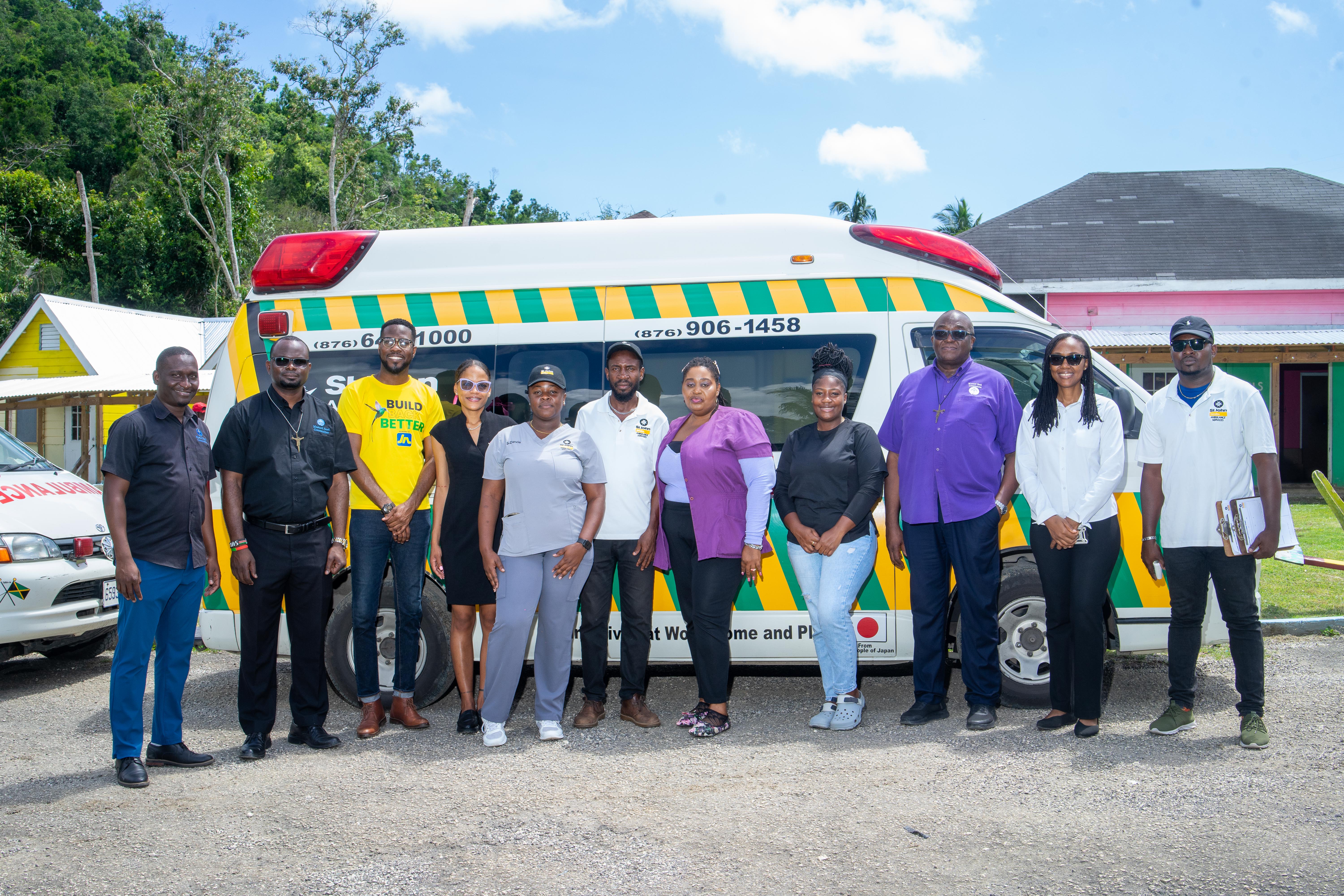
Working alongside the JN Foundation and St John Ambulance Jamaica, the Corus team, which has provided part funding for some of the initiatives, joined the medical mission to Wakefield, Trelawny on Saturday April 18. The outreach brought critical healthcare services directly to residents still feeling the effects of the category five hurricane that severely damaged western Jamaica last October.

Sixty-five people received medical attention during the mission, and residents were also given relief packages made possible through the combined support of Corus International and the JN Foundation.

Emily Grose, associate director for humanitarian programming at Corus International, said supporting Jamaica was not just about providing immediate relief, but also about investing in recovery efforts that help communities to build back better.

“Part of our mandate is that we are agile, we respond immediately and we provide lifesaving services, but we’re also dedicated to communities for their recovery as well,” she said noting that “Being on the ground and seeing the reality of the situation is truly such a different picture. Talking to people from the community, community representatives and the JN Foundation team, you really get a sense of how devastating the hurricane was and I can see how critical the services are and for our project and our team to show up in these moments.”

She emphasised that the partnership with the JN Foundation was a natural fit as their values closely align, making the collaboration not only strategic, but meaningful. Following the launch of its own appeal fund to support hurricane-affected communities after the major storm, Corus International engaged the JN Foundation to identify the most effective ways to deliver meaningful support to those in need.

“In discussing with JN Foundation, we found this was the approach they were taking, having done the needs assessments in the most affected parishes,” she said. “For Corus International, it’s always important for us not to come with a set of ideas in mind, but specifically to respond to the needs on the ground,” she further explained.

Corus International, headquartered in Washington DC in the United States of America, conducts humanitarian and development work in 30 countries across the Americas, Africa, Europe and Asia. Claudine Allen, general manager of the JN Foundation, said the donor team’s first-hand engagement in Jamaica validated what the JN Foundation has been reporting through its field operations. She confirmed that support from Corus International has enabled 12 of the more than 20 medical missions coordinated by the JN Foundation, and supported by several partners, across hurricane-affected parishes to date.

“Through Lutheran World Relief, a Corus International entity, their business is emergency and crisis response and so they were able to give us advice and financial support to expand the number of missions that we executed and they’ve come to Jamaica to be a part of the final phases of the execution,” she shared. 

Underscoring the importance of continuing these activities, Ms. Allen said that while conditions have improved and “physical progress is visible” since the first mission, ongoing demand for health services persists.

“Being able to see a doctor is something we take for granted … There are many Jamaicans who don’t have the resources or don’t have the opportunity to go sit with a doctor and receive a check-up.”

This is the reality for 73-year-old Wakefield resident Mertelda Hemmings, who was first in line for the mission to the community, despite her home still damaged from the hurricane. The storm took her roof, which is currently covered with cardboard and damaged appliances and furniture, including a new television she received just before the disaster struck.

Ms. Hemmings, who lives alone with physical health challenges, said the initiative delivered more than healthcare. It also brought financial relief, as she is unable to afford regular visits to her doctor.

“I’m happy for this, that’s why I was number one in line,” she said. “Somebody told me about it while I was coming from church Sunday and as I woke up today, I spread my bed and came here. I appreciate it.”

Read more

JN Using Melissa Donations to ‘Build Back Better’, Help Most Vulnerable

Photo Caption: Omar Wright (left), lead, environment and community development at the JN Foundation observes construction taking place at the Blessed Assurance home for the vulnerable in St James operated by Mustard Seed Communities (MSC). The facility cares for adults and children with physical and developmental challenges. Showing the work being done to Mr Wright is Father Garvin Augustine, executive director, MSC. The home has received $1 million from the ISupportJamaica Fund to assist with restoration after it was severely damaged by Hurricane Melissa.

Even before survivors of the ferocious Category 5 Hurricane Melissa began to rebuild their lives, the JN Group was busy galvanising partners- Jamaicans overseas and friends of Jamaica- to be ready to support the rebuilding process.

As the hurricane bore down on the country, the Group reactivated the ISupportJamaica Fund for Hurricane Melissa, appealing to especially Jamaicans overseas to donate cash and in some cases, kind, to help families, institutions, vulnerable groups and the communities they once called home to persevere against the odds.

From organising packed concerts to contributions of cans of food, hygiene and emergency items; from remitting funds via JN Money to donating via issuportjamaica.com with a credit card, Jamaicans in the diaspora played their part in raising some $14 million to give families, friends and communities back home the opportunity to thrive again.

“The response was overwhelming”,

Paulette Simpson, executive, corporate affairs at the JN Group- a key mobiliser of JN’s efforts- reflected. Domiciled in the United Kingdom, she created a hub for well-wishers at JN’s representative office in the UK to package containers of items for shipping to their “island in the sun.”

Photo Caption: A member of the Jamaica Fire Brigade washes away mud and debris from a section of the Dudley Grant Demonstration Basic School in Catherine Hall, St James. Several homes, businesses and facilities were inundated by floodwaters in addition to being damaged by category 5 storm winds wrought by Hurricane Melissa. The JN Foundation, through the ISupportJamaica Fund and partnerships, organised and funded a workday to clean up the early childhood institution. The school is one of the facilities receiving focus for assistance from the donated funds managed by the Foundation.

“So many came, sharing their own personal stories of friends and family they had in Jamaica, whilst others had visited Jamaica and wanted to help, and they all simply brought whatever they could,” she remembered.

Establishing partnerships with bold and benevolent private companies and institutions overseas and Jamaica, the JN Group, through its JN Foundation has, since then, been diligently distributing the donated items and carefully investing the cash contributions into delivering medical aid and food to needy and remote areas, as well as supporting core groups.

“We earmarked 40 per cent of the cash donations to repair severely affected early childhood institutions, which have been important pillars in their communities,” outlined general manager of the JN Foundation, Claudine Allen. The schools included the Dudley Grant Demonstration Basic School in Catherine Hall, St James, which was the most severely affected of the institutions identified for assistance.

Photo Caption: A child accepts a gift from Santa in this photo moment captured during an event at the William Knibb Memorial High School on Sunday, December 21. It was organised and hosted by FYI Consultancy Group in collaboration with the JN Foundation for residents of Trelawny who were severely affected by Hurricane Melissa. Funds donated by mainly Jamaicans overseas to the ISupportJamaica Fund managed by the Foundation assisted to bring some Christmas joy to people who did not experience season as a result of the hurricane.

“Through our JN Circle chapters, affiliated organisations and volunteers, we mobilised people, investing several man-hours and services into restoring the schools. And although there is still much more to do, the institutions can continue to edify and nurture our children who are at the most vulnerable stages of their lives,” explained Ms Allen, adding that despite their importance to child development, early childhood institutions in Jamaica are mostly privately run and severely under-resourced.

The remainder of the cash contributions have been used to address the needs of children’s homes and places of safety in devasted areas, homes for the elderly and at-risk groups (30 per cent), and the remaining 30 per cent is being used to support first responders.

“We’ve identified the Trelawny Infirmary, the Blessed Assurance Apostolate in St James, and a women’s shelter to receive assistance with rebuilding,” Ms Allen said. “Thirty per cent of the donations will also assist police youth clubs and JN Circle chapters with supporting community outreach efforts.”

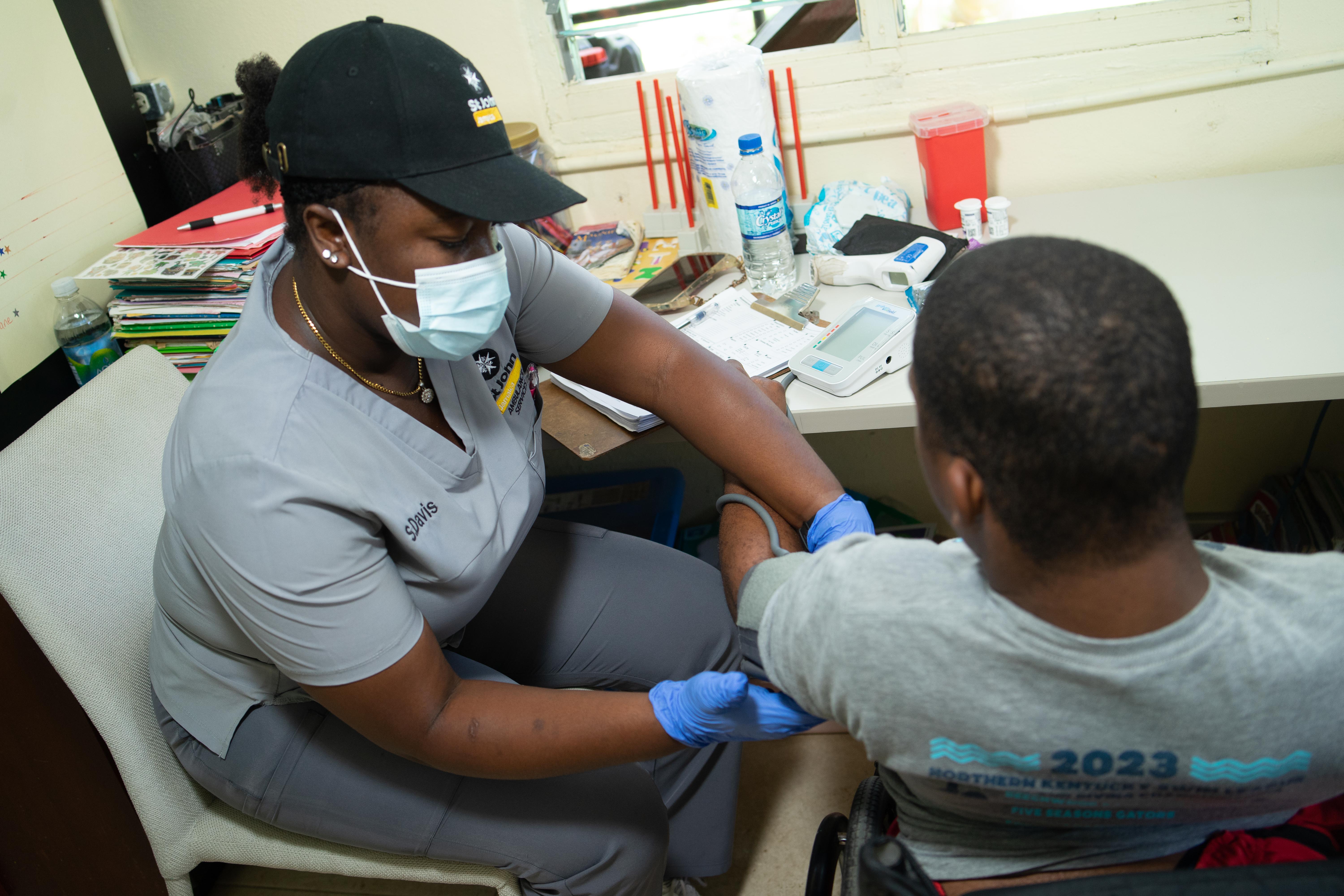
Photo Caption: A resident of the Blessed Assurance home for the vulnerable in St James has his vitals checked by a member of the St John Ambulance Jamaica medical team. Funds donated to JN’s ISupportJamaica Fund, are also being used to support medical missions to remote and underserved communities severely affected by Hurricane Melissa.

Noting that JN Circles nurture and strengthen JN’s connections at the community level, Miss Allen added “Our members nominated groups, elderly and the most vulnerable families for help, providing evidence of loss, and helping them and us to direct the relief where it is most needed.”

Since Melissa’s landfall, the JN Foundation has conducted 14 outreach missions in four parishes, beginning as early as a day after the hurricane’s passage. On each mission it has brought medical services, in collaboration with St John Ambulance Jamaica, to treat injured survivors, conduct basic checkups and supply medication to those left without access. The Foundation has also provided counselling services to the traumatised and distributed care packages while also providing a meaningful and dignified Christmas to many who could have no festivities.

“Through donations and partnerships, our missions have attended to the medical needs of more than 700 people across four parishes and delivered more than 2,300 relief packages,” outlined Ms Allen. “And we continue on those missions because there are still many, particularly residents in remote communities, who remain without services and need the attention to help rebuild.”

“We are focused on helping to build back better,” she affirmed.

Photo Caption: A resident of Albert Town, Trelawny, speaks with JN chaplain, Reverend Dr Kevin Page, during a medical mission and intervention to the rural community a few weeks after Hurricane Melissa’s passage. The ferocious system left many residents of the community and across the parish shaken and in need. Funds donated to the JN Group’s ISupportJamaica Fund by mainly Jamaicans overseas are being used to fund interventions like these that reach remote communities and vulnerable groups.

Read more

New Helmet Standard Aims to Save Lives, Reduce Economic Costs

Jamaica is losing billions of dollars annually due to motorcycle crashes, with unsafe and substandard helmets emerging as a major contributor to both fatalities and the country’s growing economic burden.

This was the warning from Sydoney Preddie, Lead for Youth and Education Programme, JN Foundation, during her address at the launch of the JS 374:2025 Jamaica Standard Specification – Protective Helmets for Road Users National Helmet Safety Standard by the Bureau of Standards Jamaica recently. Her address positioned road safety not only as a public health concern but also as a critical economic issue, with far-reaching implications for national productivity and economic growth and stability.

Referencing data, Ms Preddie argued that that motorcycle-related crashes are draining national resources at an unsustainable rate. She noted that regional estimates show that road traffic incidents account for three and five per cent of Gross Domestic Product (GDP) in Latin America. In the Jamaican context, she reasoned that this translates to more than $100 billion annually in crash-related costs, funds that she said could otherwise be invested in infrastructure, education, and job creation.

“This is not just about safety; it is an economic issue,”

Ms Preddie emphasised, highlighting the compound losses arising from healthcare expenses, reduced workforce participation, and long-term disability.

The cost of treating injuries alone is significant. It takes an average of $3 million to treat a single severely injured motorcyclist, she said, placing immense pressure on Jamaica’s already strained public health system.

Beyond direct medical costs, she underscored the hidden economic toll, including lost income for victims and their families, as well as reduced national productivity when working-age people, usually men, are killed or incapacitated.

Motorcyclists, she noted, represent one of the most vulnerable groups on the nation’s roads, accounting for over 30 per cent of annual road fatalities. In 2025 alone, there were 126 motorcycle-related deaths, contributing to more than 1,600 fatalities recorded since 2012.

Photo Caption: Sydoney Preddie, Lead for Youth and Education Programme, JN Foundation addressing the launched a new national standard for helmets worn by motorcyclists at the Jamaica Business Development Corporation Incubator and Resource Centre in Kingston recently.

Despite the risks, she said helmet quality remains a major concern. Ms Preddie revealed findings from a 2024 mystery shopper initiative in which 16 helmets being sold in stores were tested. Only one met the required safety standards she said, even though all were labelled as certified.

“The study exposed widespread issues, including weak chin straps, insufficient padding, and misleading labels, [which are] factors that significantly increase the likelihood of fatal head injuries in crashes,” she informed.

“The reality is that not all helmets offer protection,” she said, stressing that poor-quality imports have left Jamaican riders dangerously exposed.

The road safety professional argued that without proper regulation, Jamaica risks becoming a dumping ground for substandard safety gear, a trend observed in other developing countries. She cited Kenya as an example, where more than 90 per cent of helmets tested failed to meet safety standards.

However, she pointed to success stories within the region. In Guyana, the implementation and enforcement of helmet standards led to more than 80 per cent reduction in motorcycle fatalities, demonstrating the potential economic and social returns of strong regulatory action.

New Jamaican Standard Will Close Gaps

Dr Velton Gooden, executive director of the Bureau of Standards Jamaica said the newly introduced Jamaican standard is expected to address these gaps by strengthening oversight at the ports and ensuring that only certified helmets enter the local market. He said this represents a critical step toward reducing preventable deaths while safeguarding the country’s economic future.

With motorcycle use increasing amid the growth of delivery services and informal transport, Ms Preddie stressed the urgency of action.

“We are not only protecting motorcyclists,” she underscored, “we are protecting Jamaica’s economy.”

Photo Caption: Sydoney Preddie (left), Lead for Youth and Education Programme, JN Foundation in discussion with Jacqueline Millington (from second left), chair of the Standards Council at the Bureau of Standards Jamaica (BSJ; Delano Seiveright, state minister in the Ministry of Industry, Investment and Commerce; Dr Velton Gooden, executive director of the BSJ; Dr Sharonmae Smith Walker, chief executive officer of the Caricom Regional Organizational for Standards and Quality and Agnieszka Krasnolucka, programme director at the FIA Foundation. Occasion was the launch of BSJ Motor Cycle Helmet standard -JS 374:2025 at the Jamaica Business Development Corporation Incubator and Resource Centre in Kingston, recently.

Also addressing the launch of the standards, State Minister in the Ministry of Industry, Investment and Commerce, Delano Seiveright, reiterated that motorcyclists remain among the most vulnerable road users.

“Today marks a critical milestone in Jamaica’s ongoing efforts to strengthen road safety, consumer protection and our national quality infrastructure. The launch of JS 374:2025 Jamaica Standard Specification – Protective Helmets for Road Users represents far more than the introduction of a technical standard. It represents a decisive step by Jamaica to protect lives through science, regulation and coordinated national action,”

he explained.

Mr Seiveright said too many lives are being lost or are being altered permanently because of substandard protective equipment and failure to wear the equipment.

Read more

Linstead School Sees Attendance Boost Following Start of Breakfast Programme 

Photo Caption: Secretary of the JN Circle Linstead Chapter, Kareen Dennis (right), presents breakfast supplies to Annette Steele (left), principal of Victoria Primary School.

A breakfast programme initiated by the JN Circle Linstead Chapter is having a measurable impact on student attendance and well-being at Victoria Primary School, a rural institution located just outside the town of Linstead.

The initiative was introduced in November last year, shortly after schools reopened following the passage of a hurricane and was born out of discussions between JN Circle members and the school’s administration during Read Across Jamaica Day activities earlier in the academic year.

JN Circle Linstead Chapter President Godfrey Marshall said the idea emerged after the chapter sought to better understand the school’s challenges.

“At the end of Read Across Jamaica Day, we were having discussions with the principal about the strengths and weaknesses at the school,” Marshall explained. “When we spoke about the student population, especially on certain days, it came out that one of the contributing factors to low turnout was a breakfast situation, where some children were not getting breakfast.”

The matter was taken to the chapter’s executive, which agreed to support the school by sponsoring an additional day of breakfast beyond what is already provided through government assistance.

“We all bought into the idea as an executive body, reached out for sponsorship and decided to move forward with the programme,” Marshall said.

According to Principal Annette Steele, the impact was felt almost immediately.

“We started in November, just after the hurricane, and it has really impacted attendance,” Steele said. “Previously, we had children coming late or not coming at all because they hadn’t eaten. Now they can come by 7:30 a.m. and get a hot meal, and that has really boosted our midweek attendance.”

She explained that breakfast typically includes items such as fried dumplings, sausage and a hot beverage, which students now look forward to each week.

“We realised that sometimes we underestimate who is really in need,” Ms Steele added. “Even some children we thought were having breakfast actually weren’t. The programme has been tremendous, and we are very grateful to the JN Circle, Mrs Dennis and the team.”

Secretary of the JN Circle Linstead Chapter, Kareen Dennis, said the programme was made possible through modest but consistent support, despite the chapter’s small membership.

“When we saw the budget, we realised it didn’t take much to make a difference,” Mrs Dennis said. “By topping up items like flour, Milo and oil, the school could sustain an extra day of breakfast.”

Mrs Dennis noted that students often express excitement when volunteers visit and are eager to help, a response she says reinforces the importance of the initiative.

“When children are hungry, they can’t focus on learning,” she said. “Seeing their joy, their respect and their enthusiasm really motivates us to continue.”

Victoria Primary School, which serves approximately 250 students from Grades One to Six, has been part of the community since 1935 and continues to produce strong academic and cultural outcomes, despite its rural setting.

The JN Circle Linstead Chapter, which has about 10 active members, hopes to sustain the programme and eventually expand similar support to other schools within its catchment area.

“We’re really happy that we’re able to partner with one of our schools,” Mr Marshall said. “The Linstead Chapter is proud to be impacting the community it serves and reaching our nation’s children.”

Read more

Mustard Seed Communities Receive Some ‘Comfort for Christmas’ 

The JN Foundation has continued its tradition of giving, reaffirming its commitment to Mustard Seed Communities through its Comfort for Christmas initiative. From essential food items to diapers for daily care, find out how this year’s donation is supporting residents at Jacob’s Ladder in St Ann and bringing hope during the holiday season. 

For the fourth consecutive year, the JN Foundation has reaffirmed its commitment to Mustard Seed Communities, spreading holiday cheer and delivering much-needed practical support through its annual Comfort for Christmas initiative. 

This year’s donation, delivered to the Mustard Seed-managed facility at Jacob’s Ladder in St Ann, included diapers and food items to support the daily care and nutritional needs of residents, many of whom are chronically ill, physically challenged or without family support. 

According to Candice Nichols, social impact assessment officer at the JN Foundation, the initiative underscores the Foundation’s sustained commitment to supporting the welfare of children.   

“This really came from a place of acknowledging the need to support our vulnerable communities across the island,” Ms Nichols said. “Mustard Seed is a very established organisation with 11 apostolates islandwide, and while they manage their operations very well, the need is always significant.” 

She explained that residents at Mustard Seed range from newborns to the elderly and include persons who are fully or partially dependent on medical and nutritional care. 

“We wanted to continue with our donation of diapers, but we also extended the range of donations to include food items based on the request from the administrator at the home,” Ms Nichols noted. 

Assistant mission manager at Mustard Seed Communities at Jacob’s Ladder, Reanna Simpson, said the donation would have an immediate and meaningful impact on residents, particularly those with special dietary and medical needs. 

“The food items are especially important because many of our residents have multiple disabilities and specific nutritional requirements,” Ms Simpson said. “Having items tailored for conditions such as diabetes or high blood pressure makes a real difference in how we care for them, and it also eases the financial burden of purchasing food and essential supplies.” 

Ms Nichols pointed out that the initiative aligns directly with the Foundation’s broader mission of supporting vulnerable children and adults, a focus it has maintained for decades. 

“Mustard Seed is home to residents of all ages, and they are all vulnerable,” she said. “Supporting them made perfect sense for us, and it’s not something we are hoping to abandon anytime soon.” 

She added that the impact of Hurricane Melissa heightened the urgency of continued support, as donations to Mustard Seed slowed while national relief efforts were concentrated in other hard-hit areas. 

“With the passage of Hurricane Melissa, there was an increased need for support,” Ms Nichols explained. “Even if we weren’t able to do as much as we would want to, we could not turn our backs on them this Christmas.” 

Miss Simpson echoed the importance of sustained support beyond the holiday season, noting that Mustard Seed provides a permanent home for persons who are often abandoned or forgotten. 

“This is a community that cares for persons who have no one,” she said. “What we offer here is dignity, care and a second chance at life, and support from organisations like the JN Foundation helps us ensure that no one who comes here is ever abandoned again.” 

Miss Simpson encouraged members of the public to support institution. 

“It does not necessarily take much,” she said. “If you can’t give financially, you can volunteer your time or help identify a need. What matters is the willingness to give.” 

Jacob’s Ladder, which is home to 155 residents, sustained minor damage from Hurricane Mellisa, but its greenhouses, which are used to grow the institution’s vegetables and ground provisions, were damaged, and as such, they have to purchase these items.  

The Comfort for Christmas initiative continues to be a cornerstone of the JN Foundation’s outreach efforts, providing not only seasonal cheer but meaningful, year-round support to institutions serving Jamaica’s most vulnerable populations. The initiative is funded by members of staff of The Jamaica National Group. 

Although not extensively directly affected by Hurricane Melissa, Jacob’s Ladder, an institution operated by Mustard Seed Communities, which cares for the vulnerable and abandoned, has observed a decline in the benevolence it normally receives, since the passage of the storm. The JN Foundation remained consistent, galvanizing support among JN employees to maintain its annual donation of supplies through its ‘Comfort for Christmas’ initiative, providing the St Ann-based hostel with well-needed items. Accepting the donations is Reanna Simpson (second right), Assistant Mission Manager at Jacob’s Ladder who is joyfully flanked by members of the JN Foundation team (from left): Chevanese Peters, Project Officer; Omar Wright, Lead, Environment and Community Development Programmes; Kayanna Dehaney, Intern; Rose Miller, Financial Education Consultant and Candice Nichols (right), Social Impact Assessment Officer at the JN Foundation.
Read more

Financing, Data and Equity Issues Challenge Early Childhood Education in Latin America and the Caribbean

Strengthening early childhood education in Latin America and the Caribbean will require better financing, stronger data systems and more inclusive services, experts addressing a recent panel discussion on early childhood development in the region have said.

The panel of experts, which included specialists in global financing and early childhood education, were speaking at a recent colloquium organised by the JN Foundation and The University of the West Indies (UWI) School of Education in partnership with the Dudley Grant Early Childhood Resource Centre.

Dr Emre Ozaltin, lead economist for the Caribbean at the World Bank, noted that sustainable support for early childhood development (ECD) will require a diversified financing approach. He called for long-term financing strategies that foster coordinated support from development partners and the private sector to ensure continuity and effective services, even in the face of disasters.

“A diversified approach to funding in this area may be best – a combination of public budgets, targeted subsidies and innovative financing mechanisms, such as public private partnerships and targeted taxes,” he said. “Sustainable ECD financing is not a one-size-fits-all. Approaches tailored to social, political and economic realities, and critically, the flexibility to be able to respond quickly when disasters do strike are needed.”

He also underscored the need to invest in robust data systems, “to be able to observe the actionable information to improve the [existing] systems that we have.”

Professor Zoyah Kinkead-Clark, professor of early childhood care and education at the UWI School of Education, also emphasised the need for greater monitoring and evaluation in the sector to ensure programmes and actions are effective. Using the recent passage of Hurricane Melissa in Jamaica as an example, she also said by integrating evaluation with comprehensive support services, stakeholders can better meet the needs of children affected by crises to, among other things, ensure equity and continuity of care.

“We really need to be using that monitoring and evaluation to make the key decisions that are needed to guide the sector. We understand that many young children and their families are vulnerable, especially now, and this highlights the need to provide the kind of support they require. As a region, perhaps we can start thinking about ‘wrap-around services’ for our children and their families,” she said.

Adding to the conversation, Dr. Rebecca Tortello, education specialist at the United Nations Children’s Fund (UNICEF), also highlighted the need for improved learning environments, including more sensory based spaces and programmes in early childhood institutions (ECIs), to support children’s social, emotional, physical and cognitive development.

“It’s important that we find ways to replicate more of those spaces, following a model created by UNICEF with the Rockhouse Foundation at Savanna-la-Mar Infant Academy- one of the schools badly damaged by Hurricane Melissa. That model included clinical support through a partnership with the Ministry of Health and Wellness,” she said.

“You heard the Minister [of Education] speak about a research screening centre [to come] in Portland to complement the one that exists at Mico [University College]. We had about eight of the sensory or clinical spaces before the hurricane and we need more such support at the early childhood level to enable the necessary follow up along the National Early Screening Pathway, which starts with the Child Health Development Passport and moves through multiple assessments, including the Jamaica School Readiness Assessment developed by UNICEF and the UWI Department of Child Health and administered by the Early Childhood Commission (ECC). These sensory spaces, if strategically placed around the island, can be a possible way to bridge a key gap in the pathway,” she added.

Dr. Tortello said the way forward should also include improved infrastructure at ECIs, such as ramps and accessible toilets, to make facilities more inclusive. As she handed over the Pathway document, she also emphasised the need to expand access to teaching resources, including accessible digital textbooks (ADTs) now available on UNICEF’s Learning Passport Jamaica website at jamaicalearningpassport.org, as well as professional development programmes like the UNICEF-developed Inclusive Early Childhood Education course offered by the ECC and the Jamaica Teaching Council annually.

Dr Tracy-Ann Morgan-Smith, senior director of regulations and monitoring at the ECC, noted that along with ensuring that services are fully inclusive to accommodate children with disabilities and other special needs, improving the early childhood sector, particularly for Jamaica, will also mean reviewing legislation, implementing teacher licencing and enhancing disaster mitigation measures.

“We’re looking at putting in the legislation for system strengthening [to cater to] the whole aspect of the licencing and mandatory areas for teachers to do their professional development. Areas like toxic stress and the trauma children deal with after a disaster. That is critical. We also have to look at our climate resilience, how we now respond to education in emergency situations,” she said.

She noted that with the recent passage of Jamaica’s Data Protection Act and the evolving digital age, attention will also turn to how the early childhood legislation can protect children and others whose data is collected and used.

The two-day JN Foundation and UWI School of Education Dudley Grant Early Childhood Resource Centre Colloquium was held from November 27-28 at the UWI Regional Headquarters, under the theme: Let’s shape tomorrow, together. It brought together educators, policymakers and sector leaders to examine the state of early childhood education in the region and chart the way forward.

Read more

Embrace AI in Early Childhood Education with Caution – Tech Experts

Photo Caption: Parris Lyew-Ayee (second left), Chairman, JN Foundation exchanges pleasantries with Dr. Tiou Clarke (left), lecturer at the University of Technology, Jamaica; Dr Ricardo Anderson (centre), lecturer in the Department of Computing, The University of the West Indies; Dr Dawn DiPeri (second right), interdisciplinary design leader and faculty trainer, and, Ava Marie Reid, curriculum development specialist. All were present at  a panel discussion at the recent colloquium on early childhood education hosted by the JN Foundation and the UWI School of Education’s Dudley Grant Early Childhood Resource Centre. The session, titled Opportunity or Distraction: Technology and Early Childhood Education, explored the role of AI in shaping the future of learning.

Educators with knowledge of artificial intelligence (AI) are urging their colleagues at the early childhood level to move past scepticism and embrace the technology as part of modern teaching methods. While advocating for its integration, they cautioned that young children should not have direct access to AI tools, emphasising the importance of developing their own analytical and critical thinking skills first.

The call came during a panel discussion at the recent colloquium on early childhood education hosted by the JN Foundation and the UWI School of Education’s Dudley Grant Early Childhood Resource Centre. The session, titled Opportunity or Distraction: Technology and Early Childhood Education, explored the role of AI in shaping the future of learning.

Dr Ricardo Anderson, lecturer in the Department of Computing, reminded the audience that AI is no longer a futuristic concept, but a technology embedded in everyday life.

“AI has become ubiquitous. Almost every device we use today, every digital piece of equipment, has artificial intelligence built in,” he explained. “What we need to do is ensure those tools are appropriate for the skills we want to develop. For example, if we’re focusing on motor skills, the devices we provide must align with those objectives. Many of these devices already use AI to enhance development and provide support mechanisms for teachers and students.”

While acknowledging that some AI applications may not be suitable for very young learners, Anderson warned against resisting progress.

“We cannot afford to have a generation that isn’t literate in using appropriate technologies,” he said. “Imagine if we had rejected calculators because we feared them. Technology changes how we do things, we must remain inclusive and ensure these skills are taught.”

Dr Taio Clarke, lecturer at the University of Technology, Jamaica, highlighted that scepticism often stems from limited exposure.

“Some of my colleagues still think AI is bad,” Clarke noted. “But I ask them, ‘Have you really interacted with it? Have you attended forums or explored what’s available before passing judgment?’ Let’s not rely on TikTok opinions; let’s engage with the technology ourselves.”

Dr Clarke also stressed that technology in early childhood education should complement holistic learning philosophies.

“Technology should follow the child as they grow, not the other way around,” he said, while advocating for play-based environments where teachers moderate sessions that balance free play, guided play, and hands-on activities.

Dr Dawn DiPeri, a New York-based interdisciplinary design leader and faculty trainer, echoed the need for caution with young learners.

“AI should not be directly for young children, they shouldn’t be interacting with AI tools at that age,” she said. Instead, she recommended using AI to assist teachers, particularly in content creation.

“In my school district, only tools that meet strict data security standards, known as ‘2D compliance’ are allowed,” DiPeri explained. “For policy, I suggest creating a clear list of approved tools. And when educators ask me to teach them AI, I start with pedagogy. I ask, ‘What problem are you trying to solve?’ Sometimes technology isn’t even the answer. Identify the pain points first, then find the right solution.”

Read more

Psychologists Call for ‘Re-Imagining Education System’ to Weather Growing Climate Threats

As Jamaica begins the road to recovery from the emotional, economic and infrastructural fallout caused by Hurricane Melissa, two education psychologists are calling for an urgent overhaul of Jamaica’s education system, starting at the early childhood level. They say the revamp will strengthen resilience and better prepare children and other stakeholders in the face of rising disasters.

Delivering the first of two keynote addresses on the opening day of the JN Foundation and The University of the West Indies (UWI) School of Education Dudley Grant Early Childhood Resource Centre Colloquium on the topic, Nurturing Well-Being and Building Resilience, the specialists, Professor Loraine Cookand Dr Sharline Cole, from the School of Education at UWI Mona, argued that Jamaica must reshape how it educates and protects children and their educators, both during crises and in the classroom before and after events.

They noted that as the country remains vulnerable to climate-driven disasters, children should be empowered as “agents of protection in disasters”. They called on authors to write textbooks and storybooks featuring disaster-management techniques so children can process risk and prepare through familiar characters and culturally relevant storytelling. “Present it so that children from as early as three can start understanding what vulnerabilities they will face in society,” said Professor Loraine Cook.

The education psychologists also stressed the need to continue improving school infrastructure across the country to be hurricane resilient, as many remain vulnerable to high-impact weather systems. They also pushed for a stronger national remote learning strategy, built on both online and offline methods to ensure continuity of education when schools are damaged or inaccessible. Citing an effective model from another disaster-prone country, Belize, Professor Cook said, “they utilise transistor radios to bring learning into the homes and I think that’s fantastic. It is so flexible, you don’t just rely on the internet.”

The Cuban Model

Beyond that, the psychologists urged education stakeholders in Jamaica to adopt international best practices that teach young children practical disaster preparedness skills. Using Cuba as a case study, Dr Cook shared how early childhood schools integrate a “culture of prevention” into their curriculum, preparing children for disasters. Using age-appropriate activities like drills, storytelling and themed games, the schools teach young children to recognise risks and react to emergencies with calmness and safety. She added that in primary schools, students from grades one to six also study their natural surroundings and learn about the environment through daily observation.

“The goal is for children to become agents of change by applying and sharing what they learn both within their families and across their communities,” Professor Cook shared.

Dr Sharline Cole added that in the redesign of the education system, children must be encouraged to express and validate their emotions as part of disaster recovery.

“Children have a say, and we should provide them with an opportunity to say what they feel and understand their emotions. Let them share exactly what is happening to them because if they don’t, it’s going to create problems later on. We have to listen to what they have to say and help them to talk about it,” she said.

The psychologists also highlighted that the call for transformation extends beyond students. While noting that teachers possess some psychosocial competencies, they highlighted that the concurrent demand of delivering curriculum content and addressing students’ traumatic experiences also present a significant challenge for educators. To ease this burden, they recommended that the Ministry of Education, Skills, Youth and Information partner with universities and counsellor-training institutions to implement a structured national internship programme. Under the proposal, mental health trainees would work alongside classroom teachers to provide socio-emotional support during instructions, helping to stabilise the classroom environment and improve academic performance.

Adaptive Education System Needed

Dr Sharline Cole

While underscoring the importance of supporting educators’ well-being, the specialists also called for a more adaptive education system, one capable of shifting quickly during emergencies and informed by data.

On the point of data, they urged the Office of Disaster Preparedness and Emergency Management (ODPEM) to collect and report on data relating to the effectiveness of the existing Guidelines for Child-Friendly Disaster Management and Response, to assist in policies reflecting the realities children face before, during and after disasters.

“Despite having the guidelines, the Government faces challenges in implementing child protection in emergencies as a central focus of their operations,” Dr. Cole said, citing a 2019 statement from the Caribbean Disaster Emergency Management Agency (CDEMA).

“We have the guidelines [but] are we putting them into action and does it end there?” she questioned. “We need the data to guide our practice, to make the appropriate implementation or to make decisions. If we don’t have that data, it’s difficult for us to make informed decisions, be able to plan and ensure we have a resilient society,” she concluded.

The two-day colloquium was held from November 27-28 at the UWI Regional Headquarters, under the theme: Let’s shape tomorrow, together. It brought together educators, policymakers and sector leaders to examine the state of early childhood education in the region and to chart the way forward.

Read more