
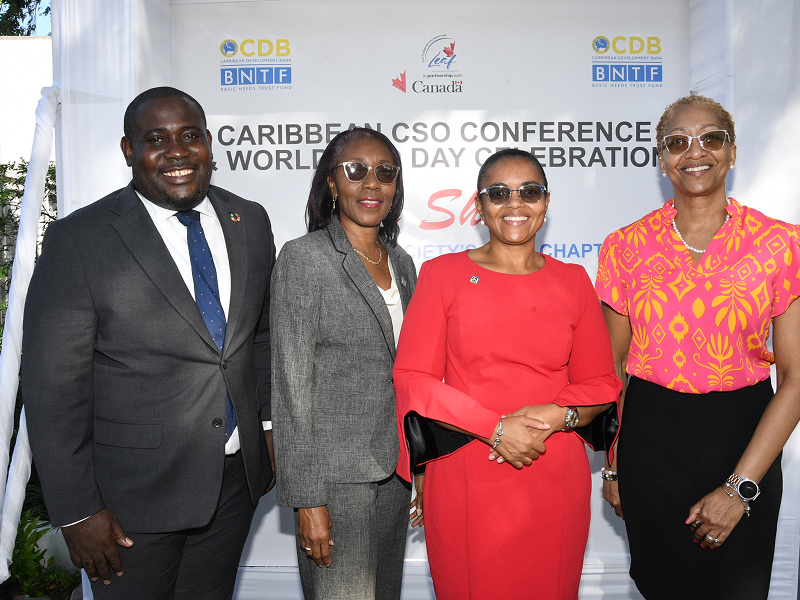
Civil society organisations (CSOs) across the region have been urged to treat financial management as a strategic tool for survival and growth. The advice was provided by Rose Miller, financial education consultant with the JN Foundation, while addressing delegates at the Caribbean CSO Conference and World NGO Day celebration in Jamaica, recently.

Delivering a presentation under the theme ‘Sustaining Vision Through Strategic Financial Management’, Mrs Miller challenged organisations to move beyond basic bookkeeping and adopt financial strategies that directly influence programme continuity, innovation and long-term impact.
“We budget in our personal lives, and it’s the same thing for our businesses,” she told the audience from several Caribbean countries at the Terra Nova Hotel in Kingston, stressing that forecasting and disciplined monitoring are essential to ensuring bills are paid, obligations are met and programmes remain on track.
She underscored that accountability, reporting and good governance are no longer optional. Without strong oversight structures, she warned, organisations risk losing credibility and jeopardising their mission. She pointed to Social Return on Investment (SROI), proper tracking of funds and clear reporting systems as critical components of modern CSO management.
Commitment to the organization’s vision and mission, she explained, protects them from “mission drift”, which is the tendency to pursue funding opportunities that fall outside their core mandate. “Sometimes we go after funding from anywhere,” she noted, cautioning that overextending capacity can dilute outcomes and weaken impact.
The financial education consultant also highlighted the dangers of relying on a single funding stream. Drawing parallels with personal finance, she encouraged CSOs to diversify revenue sources to remain resilient, in the face of reduction in donor funding or economic shocks arising from natural disasters.
Referring to the impact of Hurricane Melissa, Mrs Miller said crises expose weaknesses in organisations that operate without reserves or adequate risk management tools. She encouraged CSOs to build financial buffers equivalent to three to six months of operating expenses and to consider insurance as part of their risk mitigation strategy.
“When we have no operating reserves, that presents challenges,” she said, noting that some organisations were forced to close their doors following Hurricane Melissa because they could not absorb the shock.
The CSO’s were also warned not to fall into common financial pitfalls: these include weak internal controls, poor documentation, blurred lines between personal and organisational accounts, and inadequate board oversight. She stressed that approval processes, proper separation of duties, and clear financial policies are fundamental to the stability of the organization and its mission.
In Jamaica, she reminded participants, compliance is closely monitored by the Department of Cooperative and Friendly Societies, making governance and timely reporting even more critical.
In keeping with the theme of the conference, ‘The Shift, Igniting Civil Society’s Next Chapter’, Mrs Miller said a significant shift in how financial resources are managed must take place beginning now. She urged organisations to treat finance as a driver of decision-making rather than simply a back-office function.
To guide that shift, she presented four pillars for strategic sustainability: purpose-driven budgeting, proactive cash flow management, strong risk and compliance systems, and diversified funding.
Purpose-driven budgeting, she explained, ensures that spending aligns with the mission and priorities, with clear distinctions between programme and administrative costs. Cash flow management requires tracking inflows and outflows, forecasting delays in grants and updating projections regularly so leaders can respond quickly to challenges.
On risk and compliance, she called for active governance structures, consistent reporting schedules, updated financial policies, and regular audits. Though audits may be costly, she described them as an essential investment in credibility and donor confidence.
She encouraged organisations to expand funding models beyond restricted grants and contracts to include individual donors, major contributors and income-generating activities. While grants often come with strict conditions, diversified and funding can provide the flexibility and resilience needed to weather disruption.
“Finance enables the mission,” she said, emphasising that disciplined financial management ultimately strengthens community impact.
Her message resonated strongly with attendees, many of whom acknowledged the growing demand from funders and regulators for transparency, accountability and strategic oversight.
As Caribbean CSOs navigate an increasingly complex operating environment, Mrs Miller’s call was clear: sustainable vision requires strategic financial leadership.