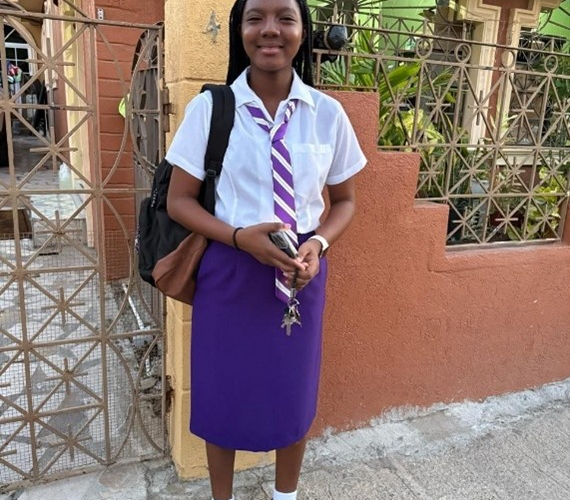

Nyla Wright Shines as an All-Round Achiever and Confident Young Leader

When 12-year-old Nyla Wright learnt she had been awarded a coveted scholarship, her first emotion was simple and sincere joy. For her mother, Trishana Wright, the moment was just as powerful.

“It was a happy feeling,” Mrs Wright shared.  “We are proud of her, of course, and happy that it was because of her performance that she received the scholarship.”

The award reflects years of dedication and thoughtful balance, traits that Nyla displays with maturity beyond her age. Now a first-form student at Campion College in St Andrew, she remembers her Primary Exit Profile (PEP) journey as a mix of discipline, creativity, and calm focus.

“For PEP, I had to practise a lot and make a lot of preparation,” she said. “But I didn’t overthink it. I took time to enjoy myself while studying and did little things that helped me remember what I was taught.”

One of her strategies was making up catchy or memorable cues to recall key topics.

“I would create little things for myself to remember stuff, and it really helped,” she explained.

Her approach paid off, earning her top performance, high exam scores, and several graduation awards, including Girl of the Year, subject awards across multiple areas, and recognition in sports and music at Kensington Primary School in Portmore, St Catherine.

“I was really surprised but happy,” admitted the former head girl.

Her parents, both pharmacists, juggled long work hours and raising three children, including four-year-old twins. Yet they made sure Nyla had the attention she needed during the high-pressure PEP period.

“Time management was the big sacrifice,” her mother said. “Balancing work and parenthood are not easy, but we became more hands-on. Even when we worked late, we ensured the time was there to help her stay focused.”

“She really surprised us with how well she managed herself,” her mother noted. “She balanced academics, leadership, and other activities so well.”

Nyla hopes her success will help reassure students who will sit PEP next year.

“Don’t overthink it,” she advised. “Stay focused and try your best to balance schoolwork and activities. It can get tough and pressuring when you’re doing too many things, so balance is important.”

Her father, Warren Wright, offers similar encouragement to parents: “Stay calm. Be the support your child needs. Provide whatever resources you can, past papers, extra lessons, and remember that mental support is just as important.”

Nyla is still exploring her future direction. “I like the creative arts,” she said. “I sing, I dance, and I play piano sometimes. I’m also thinking about trying the medical field. My options are still open.”

At Campion College, she is already settling into school life and its new rhythms.

“I think Campion is really nice,” she said warmly. “It suits me. They have a lot of events and activities, and I like my teachers. Learning is pretty fun there.”

Mathematics has unexpectedly become her favourite subject. “I never imagined myself liking math,” she laughed. “But I really like it now.”

For her parents, watching her continue to grow into her abilities is the greatest reward.

“Education plays a very important role,” her mother reflected. “Coming from a struggling background myself, it was education that helped me achieve my goals. I want the same for my children.”

One of 37 recipients of five-year scholarships this year, Nyla Wright joins the list of hundreds of young Jamaicans whose secondary education has been supported through the JN Foundation’s scholarship programme since 1983.

Read more

Be Wary of Seasonal Spending Traps

Financial Education Expert Urges Caution in Peak Seasonal Shopping Period Amid Post Hurricane Struggles

As one of the most intense shopping periods draws near, consumers are being urged to approach deals with care, as some promotions may overstate discounts, be misleading or fraudulent, this is a perennial warning but especially, now in the aftermath of Hurricane Melissa.

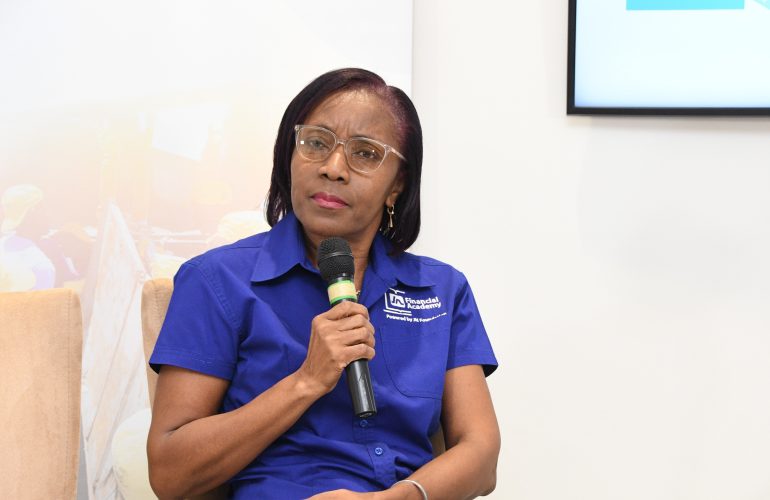
With Black Friday, Cyber Monday and the lead-up to Christmas fast approaching, “people may be looking to shop to replace what was lost, support loved ones who are starting to rebuild from Hurricane Melissa, or even get a headstart of securing the usual Christmas gifts for family and friends” said Rose Miller, financial education consultant at the JN Foundation. “However, be wary of offers promoting major markdowns, because those discounts could be limited or not genuine at all. The rush for savings can lead to overspending, poor financial decisions and exposure to deceptive deals targeting vulnerable shoppers.”

In Jamaica, the Black Friday and Cyber Monday cultures are steadily gaining traction, and more consumers are turning to online marketplaces and e-commerce websites that offer periodic deals. However, complaints about fake or exaggerated deals, especially during this shopping period have been noted in recent years.  This is true for many major markets as promotional advertisements and signage flood both online channels and physical stores to attract shoppers’ attention.

Mrs Miller therefore advises consumers to be cautious during the “period of temptation.” She emphasised that while legitimate deals allow the dollar to “stretch a little further”, the heightened risks and demand following the hurricane mean shoppers need to plan carefully and spend intentionally.

“Those real deals and discounts can offer savings, but consumers must remain discerning,” she said adding that “Even in challenging times, there are those seeking to exploit shoppers. You don’t want to create financial stress for yourself when it could be avoided and bearing in mind the imminent economic fallouts, we must be wise in this season.”

Mrs Miller emphasised the importance of doing research, encouraging consumers to explore multiple options before committing to a purchase.

“Don’t be swayed by flashy signs or emotional videos on social media,” she said. “Take the time to shop around. Other stores or websites that don’t advertise flashy deals may actually offer better prices or greater value,” she said, while urging shoppers to be mindful of their budget and know exactly what they can afford to spend.

Mrs Miller also cautioned against emotional spending, noting that guilt or the desire to please others can cloud judgment and lead to impulsive purchases. “When a deal feels rushed or too good to be true, it probably is,” she also warned.

For online shoppers, she advised sticking to reputable websites and verified retailers, carefully evaluating deals before making a purchase and comparing advertised discounted prices with regular prices to spot inflated or misleading discounts.

“Check reviews and verify sellers before making a purchase. This is another good habit shoppers should cultivate,” she advised. “Avoid clicking on links from unknown sources and be cautious of online businesses on social media without clear contact information or business details.”

Additionally, consumers are urged to ensure payment systems are secure; that they use credit cards that offer greater protection against fraud, and keep records of all transactions that can help verify purchases and resolve disputes should they arise.

“The hurricane’s aftermath has increased both the need and urgency to make purchases, creating additional opportunities for many to exploit consumers with fake deals, websites and social media pages. Stay alert and vigilant as you shop to avoid falling into the traps being created by those looking to exploit you,” she shared.

Read more

Raising the Bar on Financial Literacy  

Expert Highlights Critical Gaps as Awareness Grows Around ‘Get Smart About Credit Day’

The JN Foundation is urging Jamaicans to seek opportunities to raise their financial literacy and improve their money habits, especially around credit management.

The emphasis on credit management aligns with the broader goals of ‘Get Smart About Credit Day’, being observed on October 16 this year. The annual observance, launched in 2003 by the American Bankers Association Education Foundation, aims to promote responsible use of credit among young people and raise the level of financial education. This awareness will promote how informed financial decisions can lead to long-term stability. ‘Get Smart About Credit Day’ is celebrated on the third Thursday in October every year.

Rose Miller, financial education consultant with the JN Foundation, said the day is critical for Jamaica. She said many individuals and small businesses still struggle to understand how credit works, which contributes to the country’s overall low financial literacy rate. She stressed that this gap in knowledge often results in poor financial decisions and negative consequences.

“We want to ensure that the financial education of our nation is moving to another level,” she said. “We are still too far down on the financial literacy bar. We need to get the gauge up to a much higher level as our survival as families and as a nation depends on our ability to utilise not only credit but the other tools like budgeting, savings, investments and even insurance, to get to another place financially.”

Financial literacy in Jamaica has consistently been low. In 2015, the S&P Global Financial Literacy Survey’s report ‘Financial Literacy Around the World’ found that only 33 per cent of adult Jamaicans were financially literate. More recently, the 2022 ‘Financial Literacy Baseline Survey,’ conducted by the Bank of Jamaica (BOJ), revealed that the same proportion of youth aged 12–19 were financially literate, highlighting a persistent gap in financial knowledge across generations.

Mrs Miller said while the JN Foundation has been working to increase financial literacy among Jamaicans through initiatives such as the JN Financial Academy, collective effort, ongoing education and public awareness are key to narrowing the gap.

“You won’t see any impact if you just sit back and do nothing. You must take action. One of the things we also emphasise is to bring someone else along with you on the education journey – a

family member, a child, a spouse – so that as you increase your own knowledge, you also share it with those in your sphere. That’s how real progress happens,” she said.

As part of this year’s observance of ‘Get Smart About Credit Day’, the Foundation, through the JN Financial Academy, has organised a free Smarter Credit Day Workshop for October 16 to help individuals strengthen their credit habits and deepen their understanding of credit reports and scores. The workshop, which features presentations from two of Jamaica’s credit bureaus and personal testimonials from individuals successfully building and repairing their credit, was designed to empower participants with practical knowledge to achieve long-term financial stability.

Mrs Miller noted that the initiative builds on the JN Financial Academy’s Smarter Credit Course, which has successfully facilitated three cohorts to date.

“We designed the workshop so that participants leave with the knowledge they need to access and use credit in ways that benefit them, including an understanding of the five Cs of credit -character, capacity, capital, collateral and conditions – which collectively help to assess whether a borrower can use credit wisely and repay responsibly,” she said. “It’s all about empowerment and education because we want our Jamaican people to be really smart about their money,” she concluded.

Read more

Scholarship Opens Doors for Aspiring Mathematician

At 12 years old, Sutay Kameka, a bright and determined 2025 JN Foundation PEP Scholar, has her eyes firmly set on becoming a mathematician. Her love for numbers, combined with discipline and support from her mother, has already set her apart as one to watch.

The young scholar was among 14 students awarded scholarships by the JN Foundation after doing exceptionally well in the Primary Exit Profile (PEP). Sutay, who received the parish scholarship for St Thomas with an overall PEP score of 363.6, said the scholarship is a gift she describes as both exciting and life changing.

“I was very excited, to be honest. I was very thankful,” she said, her voice filled with both gratitude and determination.

The award will ease the financial strain on her mother while ensuring she has the resources to excel academically. “It will help my mom with, like, the books and stuff because I’m studying a lot of subjects… and it will help me pursue my dream of becoming a mathematician,” she explained.

Her results in the PEP examinations reflect her passion and natural talent. She scored an impressive 345 in mathematics, securing the Top in Math Award at her school. She also received top scores in social studies and the ability test, with a 97th percentile ranking.

Her placement at Ardenne High School in St Andrew was no accident. She was drawn to the school for its reputation, environment, and the fact that her close friend is already enrolled there. “Honestly, I like it there, and my close friend goes there… I was fascinated with the school’s motto ‘With God as guide, seek the best’,” she said.

Like many children preparing for PEP, she admitted the workload was her biggest challenge. “There’s too much to study,” she laughed, before quickly offering advice to students preparing for next year’s exams. “Just focus. Relax your brain and focus while the teacher is teaching.”

Her mother, Kemisha Ferron, a firefighter who raised her daughter on her own, shared how much this achievement means for their small family. “It has been an uphill struggle, but I ensure that her educational needs are met.”

For her, the scholarship is more than financial support; it is recognition of her daughter’s determination. “I know for sure it will mark her, as it rewards her hard work. She will have something to look back at and say, ‘Yes man, this is why I have to keep going.’ It will make a tremendous, positive change knowing that others see her, not just me as her mom,” she said proudly.

Ms Ferron recalled her daughter’s early promise, starting school at just one year and seven months at Aunty Pauline Childcare Centre. Since then, she has consistently excelled, always topping her class, becoming head girl at Yallahs Primary, and even competing in reading competitions with the Jamaica Library Service, where she placed second. “She’s the student that doesn’t back down from any challenge,” her mother said. “Up until today, I’ve not seen her lose that zeal.”

Outside the classroom, the young scholar enjoys crocheting, netball, and volleyball. A self-taught crocheter, she often turns to the internet to improve her craft. “It’s entertaining and relaxing,” she explained.

While most children her age may still be exploring what they want to do, she is already firm about her path. “I love maths, and I’ve always had a passion for it. I realised when I was younger, I used to always have high grades in maths, and I used to always love it. So, I just wanted to become a mathematician to pursue my dream.”

For her mother, education is the foundation of opportunity and character. “It starts from the get-go, from when the child can hold a pencil. Education paves the way for them to see a better life,” she said.

According toClaudine Allen, General Manager of the JN Foundation, supporting young achievers like Sutay is central to their mission. “We believe that every child, regardless of background, deserves the opportunity to pursue their dreams. This scholarship is not just about easing financial burdens—it’s about empowering students to excel and inspiring them to reach their full potential,” she said.

Since its launch in 1983, the JN Scholarship Programme has provided financial support to hundreds of students, enabling them to pursue their secondary education.

Read more

Goshen Postal Agency Restored Through Community Effort

 Over 400 residents now benefit from vital services

The Goshen Postal Agency in St Elizabeth is once again serving the community after a dedicated team of residents, spearheaded by the Goshen Community Development Committee (CDC), successfully restored the facility, which was damaged by Hurricane Beryl.

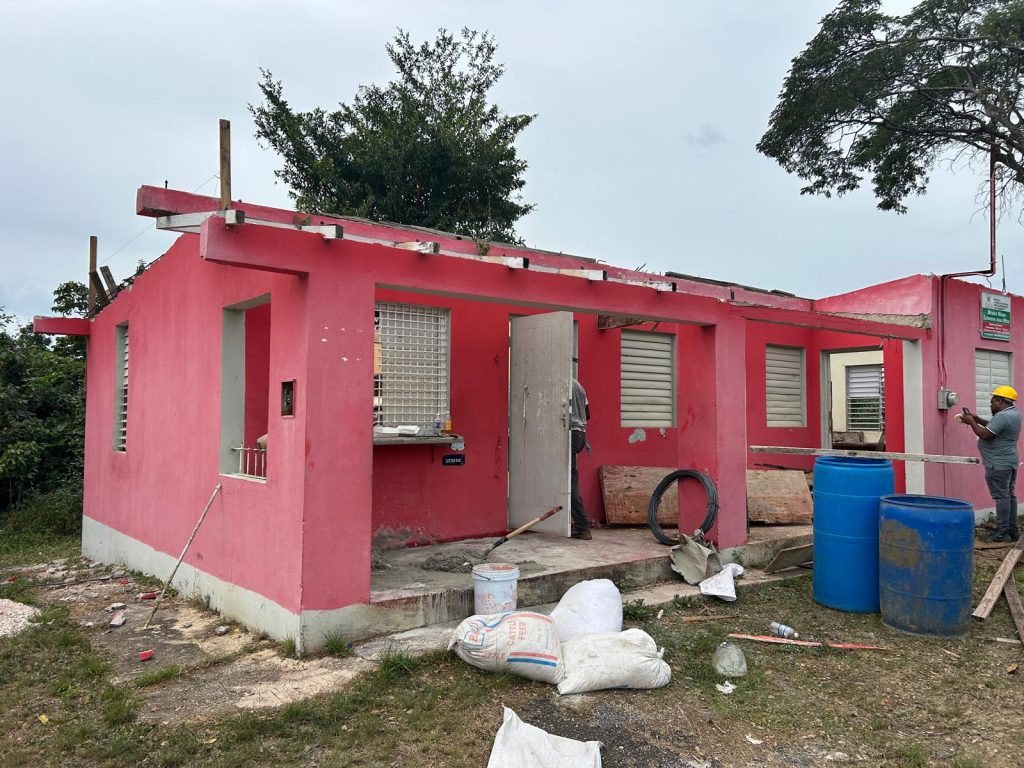
The category four hurricane, which wreaked havoc in the southern parts of the island last year, severely damaged the roof of the postal agency, forcing its closure and the relocation of its operations to the Pepper and Santa Cruz post offices.

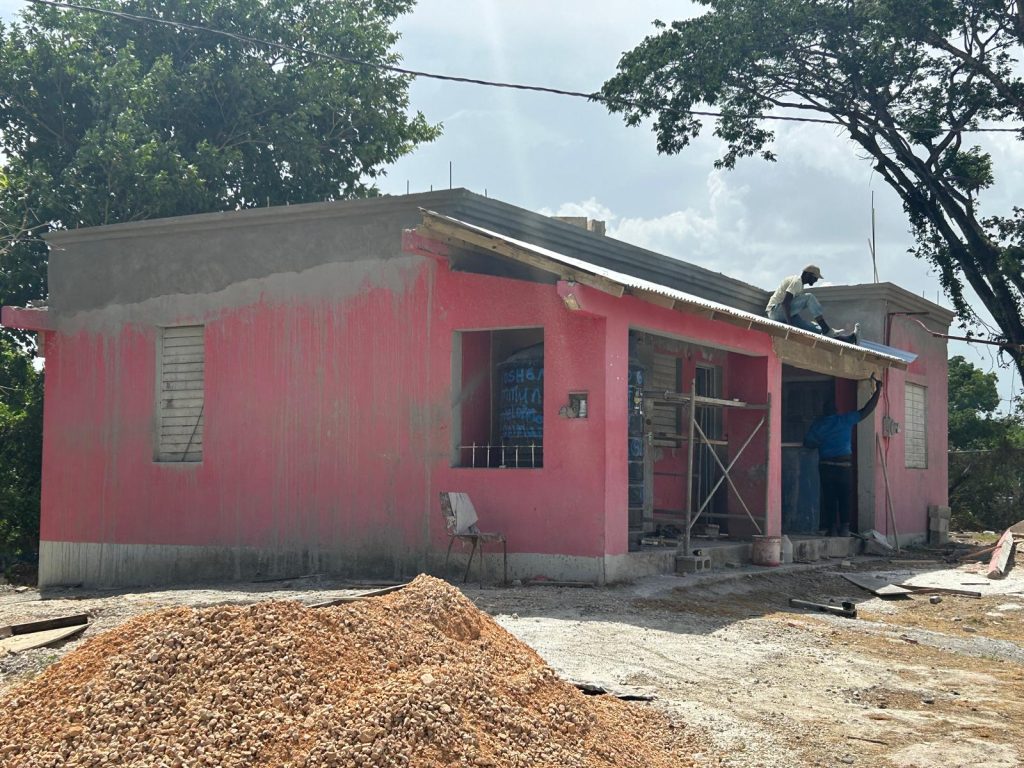
The restoration, completed and officially reopened on July 7, has brought back vital services to the rural St Elizabeth community, particularly for the nearly 400 beneficiaries of the Government’s Programme of Advancement Through Health and Education (PATH), who rely on the postal agency for the distribution of their benefits.

“Everybody’s excited. A lot of people didn’t know it would happen,” said Desmond Williams, president of both the Goshen CDC and the Santa Cruz JN Circle. “But I had confidence in my team. We knew we had to get our PA (postal agency) back on track.”

Mr Williams explained that the Goshen CDC played a central role in galvanising the community around the restoration effort. Through regular meetings and outreach, residents at home and abroad were mobilised to contribute resources and volunteer their time.

But the journey was not without challenges.

Photo Caption: Goshen Postal Agency in the Aftermath of Beryl

“Getting donations was very, very slow,” Mr Williams admitted. “It was difficult getting people on board at first, but we persevered.”

Support eventually came from all corners. “We received assistance from the JN Foundation, which gave us furniture for the building and monetary support,” Williams said. The Rural Agricultural Development Authority (RADA) also lent support, and several individuals in the diaspora contributed.

“One dollar from each person went a long way,” Mr. Williams said, adding that even those without financial means found ways to help.

Hyacinth Greaves, a resident of Goshen for more than 20 years, was ecstatic about the reopening.

“It is a tremendous relief. We missed it (the postal agency) a lot. It was difficult going up to Pepper, and now that our own postal agency is open, we are delighted with the help that we received. It is absolutely beautiful,” she said.

Photo Caption: The Rebuilding of Goshen Postal Agency

The restored postal agency is more than a building; it’s a symbol of resilience and unity, Mr Williams emphasised.

“This project shows the power of oneness. It proves that when community groups come together, outside of the norm, anything is possible,” he said.

Mr Williams expressed deep gratitude to every individual and organisation that contributed, noting that while JN Foundation and RADA were the only formal groups involved, the majority of the work came from the people of Goshen and their extended community abroad.

“I can’t say enough how grateful I am. I passed by the building just now and said to myself, ‘It really happened,’” he said.

With the Goshen postal agency now fully operational, residents no longer have to travel long distances to access postal services or PATH distributions, and the community has a renewed sense of purpose and pride.

Hakeem Atkinson, Member Relations supervisor at the Jamaica National Group, praised the community’s initiative.

We were deeply moved by the determination of the Goshen CDC to restore such an important institution,” he said. “Its projects like these that demonstrate the power of people working together for the common good. We are proud to have played a part in this community-led success story.”

Recognising the importance of the communal space for the community, Mr Atkinson said that the JN Group, through the JN Foundation, launched the ‘I Support Jamaica Fund’ shortly after the passage of the hurricane to help with its restoration and strengthen the community in the aftermath of the hurricane.

Photo Caption: Community members celebrate the opening of the postal agency during a ribbon cutting ceremony.

Read more

Back-to-School Countdown… Spend Smartly!

With the new school year just a month away, many parents are scrambling to complete their back-to-school shopping. But Garvin Grandison, financial expert at the JN Financial Academy and head of finance and regulatory reporting at JN Bank, is urging families not to panic.

“It is easy to stress when you are behind on any task, but stress and panic will only make the situation far worse,” he said.

Mr Grandison advised that while time is short, there are still ways to be strategic and save money.

“Though you’re shopping in a rush, you don’t want to overspend or buy what you don’t need,” he warned. “Whether you’re starting out early or late, the principles remain the same: get organised and be intentional with your spending.”

Start with a List and a Budget

His first recommendation is to prepare a list of school needs, prioritise the most essential items such as uniforms and textbooks and then work out a budget.

“Even if you’re behind, it’s important to avoid impulse buying. Stick to your list and buy only what’s absolutely necessary,” he advised.

Use What You Already Have

Mr Grandison also reminded parents that not everything needs to be brand new.

“Take stock of what your child already has. Uniforms, lunch kits, school bags, and even shoes may still be in good condition,” he said. “This is why it’s important to buy durable items and teach children to take care of them.”

Take Advantage of Deals, Resources and Opportunities

Parents should shop around for textbooks and supplies and explore alternatives to traditional retail stores.

“Go online, call around—don’t waste gas going store to store. You can also ask family and friends if they have used books,” he suggested.

He also pointed to opportunities to get free or discounted school supplies from churches, community groups, and book drives.

Mr Grandison highlighted the arrival of the Logos Hope ship, currently docked in Jamaica, as a timely opportunity. The ship, known for selling books at heavily discounted prices, may offer textbooks, educational resources, and storybooks that parents can use to support their child’s learning.

“Even if it’s not the exact schoolbook, you can find affordable learning materials, including storybooks and subject guides that will benefit your child academically,” he said.

Leverage Rewards and Loyalty Programmes

Another underused tool, he said, are loyalty and rewards programmes offered by many financial institutions and retailers.

“If you’ve been using a debit or credit card linked to a rewards system, now is a good time to redeem your points for school-related items, such as stationery, bags, or even supermarket vouchers,” he advised.

Plan Ahead

He stressed the importance of saving for back-to-school expenses well in advance.

“This is not an emergency expense; it’s a recurring, predictable cost that should be built into your savings plan,” Mr Grandison said.

While he acknowledged that it’s late in the game for many of the scholarships and grant opportunities, she encouraged parents to mark their calendars for the next application period and get an early start next year.

Use Credit Wisely

Lastly, Mr Grandison noted that while loans are an option, parents should be prudent.

“Only borrow what you can afford to repay and use credit facilities for critical items – not for things you can do without or already have at home,” he cautioned.

As families rush to get ready for the school bell, Mr Grandison’s advice is simple but powerful: plan, prioritise, and stay calm.

“Back-to-school shopping doesn’t have to break the bank,” he said. “Smart spending makes for a smarter start to the school year.”

Read more

‘We Must Change the Story’ – JN Foundation General Manager Makes Stirring Call to Tackle Motorcycle Deaths and Injuries

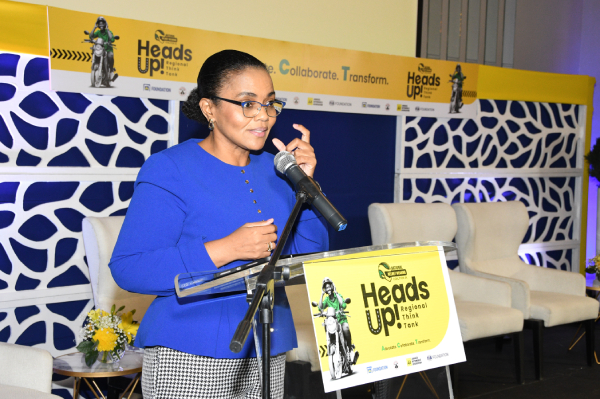
In a passionate address to stir up urgency, Claudine Allen, general manager of the JN Foundation, kicked off the Heads-Up Regional Think Tank at the AC Hotel in Kingston with a call for countries in the Caribbean and Latin America to shift the narrative on motorcycle safety to save lives.

Addressing policymakers, motorcyclists, and global road safety advocates, Ms Allen emphasised the urgent need for behavioural change to reduce preventable deaths.

 “This is a journey of advocacy and action,” she declared. “The strategy is simple: safe helmets on heads. Every ride. Every time.”

The two-day forum, which culminated on June 20, was organised by the JN Foundation through the National Helmet Wearing Coalition. It comes amid rising concerns about motorcycle crashes across the Caribbean and Latin America. Motorcycle crashes account for close to a third of road fatalities in Jamaica alone, particularly the deaths of men in their prime, productive years a figure Miss Allen says has remained stubbornly unchanged.

“This is now an economic issue,” she stressed. “Our economies are already under strain, and these deaths are creating an invisible but heavy burden. We can’t afford to keep losing our most productive citizens on the roads.”

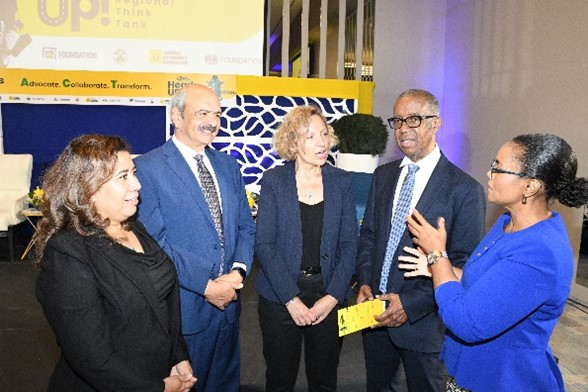
Claudine Allen (right), General Manager of the JN Foundation in discussion with (from left) with Gloria Murga, chief executive officer of Belize Automobile Touring Association; Frank Fotia, president of the FIA Region 3; Agnieszka Krasnolucka, Programme Director, FIA Foundation; Dr Lucien Jones, Chairman, National Helmet Wearing Coalition. They were at the ‘Heads Up! Regional Think Tank held at the AC Hotel in Kingston on Thursday, June 19. The event was organised by the JN Foundation through the National Helmet Wearing Coalition in collaboration with National Road Safety Council with funding from the FIA Foundation, the two-day forum aimed to address critical legislative and enforcement gaps, promote behaviour change, and mitigate the social and economic impact of motorcycle-related fatalities across the region and promote the use of certified helmets.

She highlighted the cultural reasons some riders still shun helmets, from vanity and discomfort to the myth that a short ride doesn’t require protection. She also pointed to systemic gaps, such as the need for certified helmet access, local testing facilities, and tighter enforcement.

But her message wasn’t just about the problems, it was a call to collective action.

“We have an immense task ahead, but it’s not insurmountable,” she said, pointing to successful efforts in other countries like Mexico.

“Over the next two days, we’re not just having a talk shop,” Miss Allen insisted. “We are identifying solutions- regulatory, cultural, economic- that will take us closer to zero.”

With representatives from transport, health, and national security ministries and sectors, as well as motorcyclists sharing their real stories, she said the forum is a critical step in changing the tide.

 “We’re showing up. We’re asking you to participate. And when you leave here, take action. Advocate. Collaborate. Because that’s the only way we’re going to change the story that’s become too familiar,” she pointed out.

Supporting her remarks, Agnieszka Krasnolucka, programme director at the FIA Foundation, underlined the life-saving potential of helmet use. The Foundation is the charitable arm of the FIA, the world governed body for motor sports.

“We know that the safe use of quality helmets reduces the risk of death by over six times and brain injury by up to 74 per cent,” she said.

“That makes every certified helmet wearer a life protector. And yet, too many still ride unprotected not for lack of knowledge, but for lack of access and enforcement,” she added.

Ms Krasnolucka praised Jamaica’s efforts, saying, “This is the first event of its kind in the region, and it’s already proving that regional dialogue can drive real change. We are here to shape safer roads and more resilient communities.”

The urgency to tackle the motorcycle crashes and their consequences was further underscored by Donaree Muirhead, technical assistant in the Ministry of Science, Energy and Transport, representing Minister Darly Vaz, who outlined grim statistics regarding fatalities and injuries from motorcycle incidents so far this year.

 “This is not just a national concern; it’s a regional crisis. The real issue is not motorcycles, it’s the persistent culture of non-compliance, limited access to certified helmets, and enforcement gaps,” she affirmed. We must build a safety culture from the ground up.”

The forum, hosted by the National Helmet Wearing Coalition, a project of the JN Foundation in partnership with the National Road Safety Council, with funding from the FIA Foundation, aims to tackle the challenge of motorcycle safety, particularly helmet wearing, head on, from helmet testing and enforcement to regional collaboration and youth education.

The event has brought together regional and international experts, policymakers, and advocates to tackle the alarming rise in motorcycle-related injuries and fatalities across the Caribbean and Latin America.

Read more

Teaching Kids the Power of Money: Why Financial Literacy Must Start at a Young Age

In a world where financial decisions are made daily, equipping children with financial literacy from a young age is a necessity, said Rose Miller, financial education consultant with the JN Foundation.

“Early education in money management lays the foundation for responsible financial behaviours” Mrs Miller pointed out.

She said it is important that children develop a healthy relationship with money, one that fosters responsibility, confidence, and purpose. “It’s not just about saving for a toy or a phone; it’s about nurturing a mindset that sees money as a tool to achieve personal and financial goals and do good,” she said.

“We want them to understand money, understand the value and the power it holds,” Mrs Miller explained. “It’s what you use to achieve your financial goals.”

The JN Foundation consultantinformed thatone of the key objectives is to dismantle the belief that wealth is reserved for a select few. Instead, children should be encouraged to see financial success as achievable and inclusive.

“It’s not a certain set of people who can be wealthy,” she said. “We want them to have a positive attitude towards money, one that has as its foundation good values and an understanding of philanthropy.”

By normalising conversations about money, Mrs Miller explained, that this will break the traditional silence and stigma surrounding financial discussions. “It’s not taboo,” she insisted. “It’s just about having an open, honest conversation, investing the time and resources to ensure that when it comes to handling and discussing money, they are comfortable and confident.”

She recommends the following three steps to teach children financial literacy:

Goal Setting with Purpose

Guided and support children in establishing their own financial goals, which will vary by age, from small savings goals for younger children to longer-term plans for teens. Through this, they learn the concept of goal duration or term, short, medium, or long, the associated timeframe for each and what is possible in each category.

“Teach them how to set SMART goals,” she asserted, Specific, Measurable, Achievable, Realistic, and Time-bound goals, a powerful theory not only for financial planning but one that will serve them well throughout life,” she explained.

Earning and Budgeting

She informed that goal setting is one piece of the financial literacy puzzle, another equally important piece which is directly align is teaching children how to earn and manage money through age-appropriate means, whether through chores, allowances, fundraising initiatives or even entrepreneurial ventures.

“They learn the connection between working and earning as also the value of budgeting — even with small amounts they receive,” she stated. “As they master the art of budgeting, they will be well positioned to achieve their financial goals.”

Learning from the Journey

Beyond pursuing and reaching a goal, children are also encouraged to reflect on the journey and take full advantage of the many valuable lessons. If they fall short, they’re taught how to take corrective measures, adjust their plans and learn from the experience.

“Parents can help them to reflect and evaluate,” she explained. “So that the next goal they set, they’ll be in a better position to achieve.”

Financial literacy is not just about saving and investing, it encompasses a broad range of skills and knowledge essential to making informed financial decisions throughout one’s life.  It’s also about building confidence, and a mindset that empowers children to take control of their future.

“Starting now, let’s all help our children have a better relationship with money, a tool which can be used to shape their lives but never define it” she said.

Read more

Five Reasons to Donate Blood at the NHWC Blood Drive, April 12

Donating blood is a simple yet powerful way to help save lives. Here’s your opportunity to make a real impact!

The National Helmet Wearing Coalition (NHWC), in collaboration with the JN Foundation, will be hosting a blood drive at the Cornwall Regional Hospital in Montego Bay on Saturday, April 12, 2025. Join us in making a difference!

Motorcycle-related crashes account for some 30 per cent of all road fatalities, placing immense pressure on the healthcare system, which is already experiencing a low supply of blood. According to data from the National Blood Transfusion Service (NBTS), to function efficiently the NBTS requires 60,000 units of blood annually but collects only half of that amount each year.

Can’t make it to Montego Bay? You may also consider visiting any of the NBTS collection centres across the country.

Here are five compelling reasons to roll up your sleeve and donate:

1. You Can Save Lives

A single blood donation can save up to three lives. Blood is essential for accident victims, patients undergoing surgery, those battling cancer, and individuals with conditions like sickle cell anaemia. By donating blood, you provide a critical resource that hospitals and medical facilities need to treat patients effectively.

2. You Never Know When You or a Loved One Might Need it

Emergencies are unpredictable, and anyone can find themselves in need of a blood transfusion at some point. By donating blood regularly, you help maintain a stable blood supply, ensuring that it is available when needed for yourself, your family, or a friend.

3. It is a Quick and Simple Process

Donating blood typically takes about an hour, including registration, a brief health screening, and the donation itself. The actual blood draw lasts approximately 10 minutes. This short commitment can have a lasting impact on your or someone’s life.

4. It’s Healthy!

Donating blood offers health benefits to you, the donor. Regular blood donation (every three months) can help reduce harmful iron levels in the body, lowering the risk of heart disease. Additionally, you will receive a mini health check-up, which includes monitoring blood pressure, pulse, and haemoglobin levels which can help you stay informed about your overall health.

5. Blood Can’t be Manufactured

Despite medical advancements, there is no synthetic substitute for human blood. It must come from healthy donors who are willing to give. This makes every donation critical to ensuring that hospitals have a sufficient supply for those in need.

Giving blood is a small act with a significant impact. It’s safe and deeply rewarding. If you are eligible to donate, consider making it a habit. Your generosity could mean the difference between life and death for someone in need. Schedule your donation today and become a lifesaver!

Read more

Spend Wisely This Christmas!

Photo Caption: Rose Miller, Financial education consultant at the JN Foundation, and facilitator at the JN Financial Academy.

Jamaicans are being urged to adopt smart financial practices this Christmas to avoid accumulating debt and be in a better position to benefit from an improving economy.

Rose Miller, Financial education consultant at the JN Foundation, and facilitator at the JN Financial Academy, highlights the ongoing challenges of personal debt management in Jamaica, attributing them to poor financial habits.

“Jamaicans know the importance of saving, but this knowledge often doesn’t translate into better spending practices,” Mrs Miller explained.

To help Jamaicans manage their money this festive season to avoid financial strain, Mrs Miller shares five key tips for managing money wisely:

1. Invest Any Extra Income or Clear Existing Debts

Christmas sometimes brings extra income, such as bonuses. Instead of splurging, Mrs Miller advises channelling these funds into investments.

“Consider using the bonus to pay down existing debt,” she suggested. Alternatively, she recommends placing your bonus in a fixed or long-term savings account to earn higher interest, or explore stocks, mutual funds, and other financial instruments offered by regulated institutions.

2. Create and Stick to a Budget

“A specific budget for Christmas spending is essential,” Mrs Miller emphasised. Prioritise needs over wants and allocate funds only for necessary expenses and activities.

For those using credit cards, she warns against overspending:

“Remember, your credit card is a loan with high interest rates. Spend within your means and aim to settle the balance before the due date to avoid interest charges.”  This will also ensure  that you truly enjoy benefits such as cash-back rewards and  no point-of-sale fees.

3. Be Creative with Gift Giving

Gift-giving doesn’t need to break the bank. Mrs Miller suggests tapping into personal creativity to craft unique, meaningful presents.

“Homemade gifts often cost less and hold greater sentimental value than store-bought items,” she noted. Additionally, opting for shared gifts for households can reduce costs and simplify shopping.

4. Share the Cost of Christmas Dinner

Hosting a holiday dinner should not mean shouldering all the expenses. Mrs Miller encourages families to adopt a collaborative approach.

“Ask guests to contribute by bringing their preferred drinks or specific dishes,” she proposed. “This spreads the cost and reduces your financial burden.”

5. Spend and Invest Wisely

Mrs Miller concludes with a reminder that thoughtful financial decisions can lead to a more enjoyable Christmas and a more financially stable New Year.

“By planning and prioritising, you can celebrate the season without the stress of mounting debt,” she said.

Read more