
Rose Miller (second right), financial education consultant with the JN Foundation takes a group photo with (from left), Richardo Aiken, operations officer/community development at the Caribbean Development Bank; Claudine Allen, general manager of the JN Foundation and Stephannie Coy, Programme Manager for Field Support Services Project Caribbean, which is funded by the Global Affairs Canada, Local Engagement Action Fund.

Financial Strategy Key to CSO Survival and Growth, Says Rose Miller

Civil society organisations (CSOs) across the region have been urged to treat financial management as a strategic tool for survival and growth. The advice was provided by Rose Miller, financial education consultant with the JN Foundation, while addressing delegates at the Caribbean CSO Conference and World NGO Day celebration in Jamaica, recently.

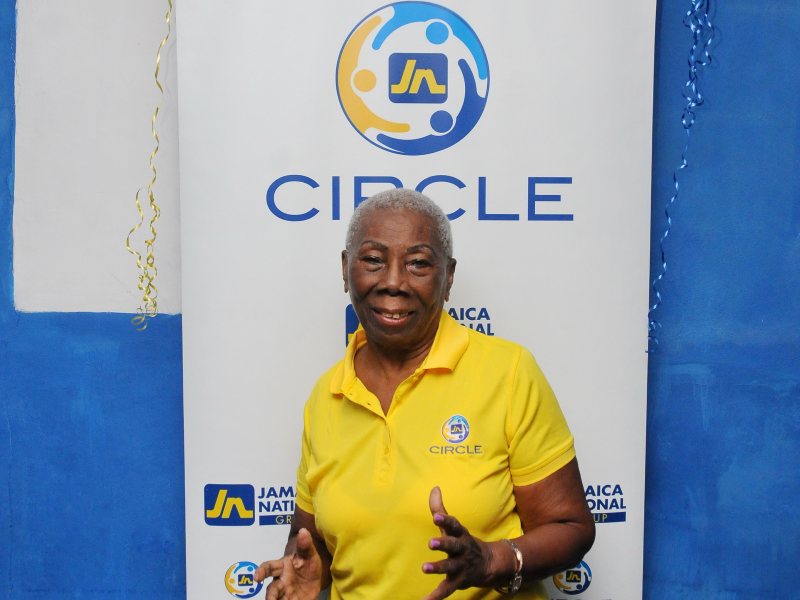
Rose Miller
Rose Miller, financial education consultant with the JN Foundation addressing the conference at the Terra Nova Hotel.

Delivering a presentation under the theme ‘Sustaining Vision Through Strategic Financial Management’, Mrs Miller challenged organisations to move beyond basic bookkeeping and adopt financial strategies that directly influence programme continuity, innovation and long-term impact.

“We budget in our personal lives, and it’s the same thing for our businesses,” she told the audience from several Caribbean countries at the Terra Nova Hotel in Kingston, stressing that forecasting and disciplined monitoring are essential to ensuring bills are paid, obligations are met and programmes remain on track.

She underscored that accountability, reporting and good governance are no longer optional. Without strong oversight structures, she warned, organisations risk losing credibility and jeopardising their mission. She pointed to Social Return on Investment (SROI), proper tracking of funds and clear reporting systems as critical components of modern CSO management.

Commitment to the organization’s vision and mission, she explained, protects them from “mission drift”, which is the tendency to pursue funding opportunities that fall outside their core mandate. “Sometimes we go after funding from anywhere,” she noted, cautioning that overextending capacity can dilute outcomes and weaken impact.

The financial education consultant also highlighted the dangers of relying on a single funding stream. Drawing parallels with personal finance, she encouraged CSOs to diversify revenue sources to remain resilient, in the face of reduction in donor funding or economic shocks arising from natural disasters.

Referring to the impact of Hurricane Melissa, Mrs Miller said crises expose weaknesses in organisations that operate without reserves or adequate risk management tools. She encouraged CSOs to build financial buffers equivalent to three to six months of operating expenses and to consider insurance as part of their risk mitigation strategy.

“When we have no operating reserves, that presents challenges,” she said, noting that some organisations were forced to close their doors following Hurricane Melissa because they could not absorb the shock.

The CSO’s were also warned not to fall into common financial pitfalls: these include weak internal controls, poor documentation, blurred lines between personal and organisational accounts, and inadequate board oversight. She stressed that approval processes, proper separation of duties, and clear financial policies are fundamental to the stability of the organization and its mission.

In Jamaica, she reminded participants, compliance is closely monitored by the Department of Cooperative and Friendly Societies, making governance and timely reporting even more critical.

In keeping with the theme of the conference, ‘The Shift, Igniting Civil Society’s Next Chapter’, Mrs Miller said a significant shift in how financial resources are managed must take place beginning now. She urged organisations to treat finance as a driver of decision-making rather than simply a back-office function.

To guide that shift, she presented four pillars for strategic sustainability: purpose-driven budgeting, proactive cash flow management, strong risk and compliance systems, and diversified funding.

Purpose-driven budgeting, she explained, ensures that spending aligns with the mission and priorities, with clear distinctions between programme and administrative costs. Cash flow management requires tracking inflows and outflows, forecasting delays in grants and updating projections regularly so leaders can respond quickly to challenges.

On risk and compliance, she called for active governance structures, consistent reporting schedules, updated financial policies, and regular audits. Though audits may be costly, she described them as an essential investment in credibility and donor confidence.

She encouraged organisations to expand funding models beyond restricted grants and contracts to include individual donors, major contributors and income-generating activities. While grants often come with strict conditions, diversified and funding can provide the flexibility and resilience needed to weather disruption.

“Finance enables the mission,” she said, emphasising that disciplined financial management ultimately strengthens community impact.

Her message resonated strongly with attendees, many of whom acknowledged the growing demand from funders and regulators for transparency, accountability and strategic oversight.

As Caribbean CSOs navigate an increasingly complex operating environment, Mrs Miller’s call was clear: sustainable vision requires strategic financial leadership.

Read more
Sherry-Lee McLean

Accountant Gains Fresh Perspective from JN Financial Academy’s Smarter Credit Course

Even with years of experience in finance, Senior Accountant, Sherry-Lee McLean, says enrolling in the JN Financial Academy’s Smarter Credit Course offered fresh insight and practical lessons that have further strengthened how she approaches money management.

Working in the financial services industry, she explained that her decision to enroll was driven by professional curiosity. After seeing information about the course through the JN Group E-newsletter, she decided it was an opportunity worth exploring.

“I just wanted to see what the course was about and if there was anything that I needed to know, just for knowledge’s sake,” she said.

Despite her background, the course proved to be insightful and informative. She pointed to debt management strategies as one of the areas where she gained new understanding.

“I knew about debt consolidation as a way of paying off loans, but I didn’t know about the snowball and the avalanche methods,” she shared, noting that the course helped her to clearly understand terminology and concepts she had previously encountered informally.

The interactive elements also stood out, particularly those focused on budgeting.

“I used to record my expenses, but I wouldn’t normally do a budget, per se,” she said. “The budgeting activity was very informative. I found the course educational and, most importantly, helpful.”

She added that the course offered practical, real-life lessons that many people often overlook. One example was guidance on preparing for annual expenses such as motor vehicle insurance payments by setting aside small amounts each month.

“A lot of us don’t think that way,” she said. “But by budgeting for these expenses monthly, you will ensure that you actually have the money when the payment becomes due.”

According to her, the design of the Smarter Credit Course makes it accessible to everyone, regardless of their level of financial knowledge.

“It’s easy to navigate, the material is clear, and the presenters break things down in a way that even someone with no background in finance can understand,” she said. “It’s for anybody, and there’s always something new to learn.”

Rose Miller, financial education consultant at the JN Foundation, underscored the importance of financial education in empowering individuals to make better decisions.

“The Smarter Credit Course is designed to help Jamaicans at every stage of their financial journey build confidence in how they understand and manage money and credit ,” she related. “By improving financial literacy, participants are better equipped to avoid common pitfalls, reduce debt stress, and plan more effectively for the future.”

The course consists of a self-paced portion, complimented by  a series of webinars. The next webinar will take place on February 25.

Members of the public are invited to enroll in the Smarter Credit Course by registering on the JN Financial Academy’s website at jnfinancialacademy.com.

The JN Financial Academy is administered by the JN Foundation.

For this senior accountant, the experience reinforced a simple truth: there is always something new to learn and the area of finance is no exception, even for financial professionals.  And this learning can lead to smarter choices and greater financial well-being.

Read more

Start 2026 Right with This Seven-point Financial Checklist

The start of a new year brings a wealth of possibilities, key among these is the opportunity to take control of your finances and build healthier money habits. With rising costs, unexpected expenses and economic uncertainties following the passage of Hurricane Melissa having a clear plan can make a significant difference to your financial outcomes, according to Rose Miller, financial education consultant at the JN Foundation.

She recommends this seven-point New Year financial checklist that will provide practical steps to help individuals and families set realistic goals and make smarter financial decisions throughout the year.

1. Review Last Year’s Spending

Begin by looking back at your spending habits and expenses from the previous year. Pick out areas where you may have overspent and identify ways to reduce unnecessary spending. Understanding past habits is a great first step towards change and improvement.

2. Create or Update Your Budget

A budget is the roadmap for managing your money. List all sources of income and outline monthly expenses, ensuring essentials such as rent, utilities, transportation, and groceries are included. A consistent and disciplined approach to this exercise will be highly rewarding.

3. Set Clear Financial Goals

Define what you want to achieve financially in the coming year. Goals may include building an emergency fund, reducing or paying off debt, saving for education, or starting a small business. Whatever the goals, be realistic, not only with each goal but also about the timelines for achieving them. And remember, track your progress regularly.

4. Prioritise Saving

Make saving a non-negotiable part of your financial plan, by making it a fixed expense. Aim to save a percentage of your income consistently. Start where you can even if it’s small, the outcome at the end of the year will surprise you. To increase your chances of success and build discipline, automate the process by having the funds transferred directly to your savings account

5. Build an Emergency Fund

Unexpected expenses can disrupt financial stability. Strive to save at least three to six months of living expenses this will improve resilience and help protect you and your family from financial shocks.

6. Tackle Debt Strategically

Review outstanding debts and focus on paying down those with highinterest first since these are more costly. At the same time, avoid accumulating new debt unless it is absolutely necessary.

7. Plan Before Spending

Avoid impulse purchases by planning and remaining focused. Create shopping lists and spend according to the limits of your budget. Do not be swayed by attractive deals which can easily railroad your plans. Be intentional when you spend, always bearing your goals in mind.

“Revisit your financial plan every few months to assess progress and make adjustments. Life changes, and your financial plan should adapt accordingly,” Mrs Miller recommends.

She emphasised that the journey to financial security is never an easy one, but starting the year with a financial check-up and a checklist can help turn intentions into action. “With planning, consistency and discipline, the new year can be a giant step towards greater financial security and peace of mind,” she pointed out

Read more

Smarter Credit Course Helps Participant Take Control of Her Financial Future

After years of using debit cards and only recently venturing into credit cards, Ana Miles with her occupation in marketing, admits she did not fully understand the complexities of credit management.

That changed after enrolling in the JN Financial Academy Smarter Credit course, a financial literacy programme designed to help Jamaicans better understand credit, loans and debt management strategies.

“I thought a credit card was as simple as using it and making a payment,” Miss Miles shared. “What I didn’t understand was how easily balances can roll over, how interest works, and how quickly things can get out of hand if you’re not careful.”

Miss Miles said her decision to sign up for the course came at a critical time. She recognised the need to take a more proactive approach to manage her credit obligations and to better understand effective financial strategies, rather than learning through trial and error.

One of the most impactful lessons for her was learning about structured debt repayment methods, including the snowball and avalanche approaches.

“I had heard about these concepts before, but the course really broke them down in a way that made sense,” she said. “It helped me see that managing debt doesn’t have to feel overwhelming.”

Since completing the course, Miss Miles has adopted more disciplined financial habits. She now keeps a written budget, tracks her expenses, and prioritises making payments on time. She also maintains regular communication with creditors, rather than waiting for collection calls.

“I’m organising my finances in a way that works for me,” she noted. “I’m staying on top of payments, even if they’re small, and that alone has made a difference in how confident I feel.”

While she has not yet made major credit-based purchases, Miss Miles believes the knowledge gained has better prepared her for future decisions.

“It’s about getting ahead of the game. Now I know I need to educate myself before jumping into anything, whether it’s another credit card, a loan, or eventually buying a home.”

Miss Miles encourages others who may be unsure about their financial knowledge to consider the Smarter Credit course.

“If you want to go beyond just swiping a piece of plastic and really understand how credit works, this course is worth it,” she said. “There are so many things happening behind the scenes that affect your credit, and you need to know where to find that information and how to manage it properly.”

Rose Miller, financial education consultant with JN Foundation, said that the Smarter Credit course empowers participants with practical tools to build healthier financial habits and make informed credit decisions.

She highlighted the upcoming January 2026 cohort, encouraging participants to start the new year by focusing on building strong credit habits. The first of three webinars is scheduled for January 28 with the remaining two slated for February 11 and 25. Members of the public are invited to enroll to take the course by registering on the JN Financial Academy website at jnfinancialacademy.com.

“The Smarter Credit Course is a free, self-paced, practical, easy-to-follow programme designed to help you manage your credit and make smarter financial decisions,” she said. “Whether you want to improve your credit score, better understand credit reports, or position yourself for future opportunities, this course provides you with the tools and guidance you need. You will benefit from expert insights from industry professionals, real-world examples, and practical strategies you can apply immediately,” she added. Mrs Miller disclosed that participants will get immediate access to course material once enrolled for the course.

Read more

Back-to-School Countdown… Spend Smartly!

With the new school year just a month away, many parents are scrambling to complete their back-to-school shopping. But Garvin Grandison, financial expert at the JN Financial Academy and head of finance and regulatory reporting at JN Bank, is urging families not to panic.

“It is easy to stress when you are behind on any task, but stress and panic will only make the situation far worse,” he said.

Mr Grandison advised that while time is short, there are still ways to be strategic and save money.

“Though you’re shopping in a rush, you don’t want to overspend or buy what you don’t need,” he warned. “Whether you’re starting out early or late, the principles remain the same: get organised and be intentional with your spending.”

Start with a List and a Budget

His first recommendation is to prepare a list of school needs, prioritise the most essential items such as uniforms and textbooks and then work out a budget.

“Even if you’re behind, it’s important to avoid impulse buying. Stick to your list and buy only what’s absolutely necessary,” he advised.

Use What You Already Have

Mr Grandison also reminded parents that not everything needs to be brand new.

“Take stock of what your child already has. Uniforms, lunch kits, school bags, and even shoes may still be in good condition,” he said. “This is why it’s important to buy durable items and teach children to take care of them.”

Take Advantage of Deals, Resources and Opportunities

Parents should shop around for textbooks and supplies and explore alternatives to traditional retail stores.

“Go online, call around—don’t waste gas going store to store. You can also ask family and friends if they have used books,” he suggested.

He also pointed to opportunities to get free or discounted school supplies from churches, community groups, and book drives.

Mr Grandison highlighted the arrival of the Logos Hope ship, currently docked in Jamaica, as a timely opportunity. The ship, known for selling books at heavily discounted prices, may offer textbooks, educational resources, and storybooks that parents can use to support their child’s learning.

“Even if it’s not the exact schoolbook, you can find affordable learning materials, including storybooks and subject guides that will benefit your child academically,” he said.

Leverage Rewards and Loyalty Programmes

Another underused tool, he said, are loyalty and rewards programmes offered by many financial institutions and retailers.

“If you’ve been using a debit or credit card linked to a rewards system, now is a good time to redeem your points for school-related items, such as stationery, bags, or even supermarket vouchers,” he advised.

Plan Ahead

He stressed the importance of saving for back-to-school expenses well in advance.

“This is not an emergency expense; it’s a recurring, predictable cost that should be built into your savings plan,” Mr Grandison said.

While he acknowledged that it’s late in the game for many of the scholarships and grant opportunities, she encouraged parents to mark their calendars for the next application period and get an early start next year.

Use Credit Wisely

Lastly, Mr Grandison noted that while loans are an option, parents should be prudent.

“Only borrow what you can afford to repay and use credit facilities for critical items – not for things you can do without or already have at home,” he cautioned.

As families rush to get ready for the school bell, Mr Grandison’s advice is simple but powerful: plan, prioritise, and stay calm.

“Back-to-school shopping doesn’t have to break the bank,” he said. “Smart spending makes for a smarter start to the school year.”

Read more

JN Foundation to Host Regional Motorcycle Safety Forum

A high-level regional forum bringing together experts, policymakers, and stakeholders to address the urgent issue of motorcycle helmet safety will be held at the AC Hotel in Kingston on June 19 and 20.

The event will feature five panel discussions and three keynote addresses, providing a platform for dynamic dialogue, interdisciplinary collaboration, and policy-orientated solutions.

Organised by the JN Foundation through the National Helmet Wearing Coalition in collaboration with the FIA Foundation and FIA motor clubs in the Caribbean and the National Road Safety Council, the forum aims to address critical legislative and enforcement gaps, promote behaviour change, and mitigate the social and economic impact of motorcycle-related fatalities across the region.

Claudine Allen, general manager of the JN Foundation, said the event is a critical step towards regional collaboration to develop, strengthen and enact policies which save lives.

‘In Jamaica, motorcyclists accounted for about 30% of road fatalities in 2024. The statistics are common to countries in Latin America and the Caribbean, where there is similar experience in managing issues related to helmet wearing, certification and standardisation.  We believe that dialogue will be helpful to arriving at a position of collaboration to address these issues,” she asserted.

With speakers from countries in the region, the event will explore legislative and regulatory gaps on how weak or absent laws contribute to a culture that undervalues helmet wearing;  challenges in enforcement and policing; and nurturing behaviour change through advocacy and storytelling.

Other topics include social and economic impact, highlighting the costs of preventable motorcycle crashes to families, health systems, and national development.

Ms Allen added that the forum will bring together regional and international experts in road safety and enforcement, psychology and behaviour change, policy development, academia and public health and international organisations, including the FIA Foundation.

Some of the presenters include Shivanie Mahadeo of the Guyana National Bureau of Standards; Dr Terry Smith, principal scientist at Galateus; Dave Cliff, chief executive officer of Global Road Safety Partnership in Mexico; Sam Clarke, head of programmes at TRANSAID; and Frank Fotia, president of FIA Region 111, based in Canada.

Meanwhile, local presenters who will address the conference are Dr Gary McKenzie, Assistant Commissioner of Police, Jamaica Constabulary Force; Dr Wendell Richards, head of the Standards Compliance Department at the National Bureau of Standards; and Col Daniel Pryce, director general, Island Traffic Authority.

Among the moderators for the two-day event are Dr Lucien Jones, chairman of the National Helmet Wearing Coalition and vice chair of the National Road Safety Council; Dr Parris Lyew-Ayee, vice president of the Private Sector Organisation of Jamaica, and Paula Fletcher, executive director of the National Road Safety Council.

Ms Allen said the objectives and outcomes of the sessions are to uncover best practices and promote evidence-based recommendations for regional implementation and encourage collaboration to increase helmet wearing.

Other objectives include developing a regional action plan aimed at improving helmet certification standards, testing helmet imports, and enhancing public awareness campaigns.

“Helmet wearing and standardisation is a troubling issue for many countries globally and creates significant economic burdens for small island developing sates, like Jamaica. Even as we take action to improve outcomes for motorcycle drivers here, if we are going to be effective, we will need to collaborate with our regional neighbours to have a stronger voice in this global discussion,” she concluded.

The outcomes will serve as a call to action for governments, institutions, and civil society. A final report and refined recommendations will be submitted to regional government representatives to stimulate further action.

Persons can register to join the hybrid event at no cost via the JN Foundation website at https://www.jnfoundation.com/heads-up-regional-think-tank/

Read more

Teaching Kids the Power of Money: Why Financial Literacy Must Start at a Young Age

In a world where financial decisions are made daily, equipping children with financial literacy from a young age is a necessity, said Rose Miller, financial education consultant with the JN Foundation.

“Early education in money management lays the foundation for responsible financial behaviours” Mrs Miller pointed out.

She said it is important that children develop a healthy relationship with money, one that fosters responsibility, confidence, and purpose. “It’s not just about saving for a toy or a phone; it’s about nurturing a mindset that sees money as a tool to achieve personal and financial goals and do good,” she said.

“We want them to understand money, understand the value and the power it holds,” Mrs Miller explained. “It’s what you use to achieve your financial goals.”

The JN Foundation consultantinformed thatone of the key objectives is to dismantle the belief that wealth is reserved for a select few. Instead, children should be encouraged to see financial success as achievable and inclusive.

“It’s not a certain set of people who can be wealthy,” she said. “We want them to have a positive attitude towards money, one that has as its foundation good values and an understanding of philanthropy.”

By normalising conversations about money, Mrs Miller explained, that this will break the traditional silence and stigma surrounding financial discussions. “It’s not taboo,” she insisted. “It’s just about having an open, honest conversation, investing the time and resources to ensure that when it comes to handling and discussing money, they are comfortable and confident.”

She recommends the following three steps to teach children financial literacy:

Goal Setting with Purpose

Guided and support children in establishing their own financial goals, which will vary by age, from small savings goals for younger children to longer-term plans for teens. Through this, they learn the concept of goal duration or term, short, medium, or long, the associated timeframe for each and what is possible in each category.

“Teach them how to set SMART goals,” she asserted, Specific, Measurable, Achievable, Realistic, and Time-bound goals, a powerful theory not only for financial planning but one that will serve them well throughout life,” she explained.

Earning and Budgeting

She informed that goal setting is one piece of the financial literacy puzzle, another equally important piece which is directly align is teaching children how to earn and manage money through age-appropriate means, whether through chores, allowances, fundraising initiatives or even entrepreneurial ventures.

“They learn the connection between working and earning as also the value of budgeting — even with small amounts they receive,” she stated. “As they master the art of budgeting, they will be well positioned to achieve their financial goals.”

Learning from the Journey

Beyond pursuing and reaching a goal, children are also encouraged to reflect on the journey and take full advantage of the many valuable lessons. If they fall short, they’re taught how to take corrective measures, adjust their plans and learn from the experience.

“Parents can help them to reflect and evaluate,” she explained. “So that the next goal they set, they’ll be in a better position to achieve.”

Financial literacy is not just about saving and investing, it encompasses a broad range of skills and knowledge essential to making informed financial decisions throughout one’s life.  It’s also about building confidence, and a mindset that empowers children to take control of their future.

“Starting now, let’s all help our children have a better relationship with money, a tool which can be used to shape their lives but never define it” she said.

Read more

Grief to Advocacy: Maleek Powell’s Mission to Save Lives on Jamaica’s Roads

Photo Caption: Maleek Powell, entrepreneur and member of the National Helmet Wearing Coalition addressing a National Helmet Wearing Coalition event, recently.

In the stillness of grief, Maleek Powell found a voice that would not stay silent. The entrepreneur, content creator, and road safety advocate channelled the devastating loss of his sister-in-law, Catherine Hyman, into a mission to prevent others from experiencing the heartache his family endured.

Ms Hyman, a beloved phlebotomist, died tragically in August 2019 at the age of 51 in a crash caused by reckless driving in the parish of St. Catherine. She was travelling to work from Spanish Town to Portmore at the time. Her death was a stark reminder of the dangers that plague Jamaican roads.

A Tragic Loss That Sparked Action

“I woke up to countless missed calls, and I just knew something was wrong,” Mr Powell recalled. “By the time I got through to my family, I was told Catherine was gone. The driver’s reckless decision to overtake a truck on a corner cost two lives that morning.”

Powell’s grief deepened when graphic videos of the crash circulated online. “I watched my sister-in-law take her last breath,” he shared. “It was devastating.”

You hear about these crashes all the time, but it doesn’t hit home until it’s your family. Catherine’s death was completely avoidable. These behaviours make no sense.”

In the wake of her loss, Mr Powell turned to social media to vent his sorrow and frustration. “For almost two weeks, I spoke online every day,” he said. “I cried, I pleaded, and I begged for change. People started listening, and it made me realise I had a role to play in advocating for safer roads.”

Mr Powell credits Catherine for shaping the person he has become. “She believed in us, in our dreams, even the untraditional ones,” he said. “She was a forward thinker who encouraged me to pursue my passions, even when they seemed out of reach.”

A Voice for Safer Roads

To honour her memory, Mr Powell committed to using his platform to promote road safety. He joined the National Helmet Wearing Coalition, a group dedicated to increasing helmet use and compliance with Jamaica’s Road Traffic Act. “Every opportunity I get to advocate, I take it,” he said. “If I can prevent even one family from going through what we did, I’ve honoured her memory.”

Mr Powell’s advocacy extends beyond helmets. He calls for systemic changes in policy, infrastructure, and enforcement. “The infrastructure to save lives is often missing, and enforcement feels punitive rather than educational,” he explained. “We need to show people why these laws exist, to save lives, not punish.”

He believes Jamaica’s culture of rule-breaking contributes to the crisis. “We need to rediscover the value of life,” he said. “Thrill-seeking and recklessness shouldn’t take precedence over safety. It’s about preserving lives, not stifling freedom.”

The Importance of Certified Helmets

Mr Powell strongly advocates for the mandatory use of certified helmets, particularly for motorcyclists. “No one should own a bike without owning a certified helmet,” he stated. “Wearing a helmet gives you a fighting chance. It should be non-negotiable.”

Through the Coalition, Mr Powell works tirelessly to amplify this message. “We aim to shift mindsets and make safety a priority,” he said. “Catherine would be proud of this work. She was always outspoken and willing to go against the grain. This is my way of carrying her legacy forward.”

For Mr Powell, road safety is more than a campaign, it’s a deeply personal mission. “Catherine laid the groundwork for who I am today,” he said. “She didn’t get to see the fruits of her support, but I hope my advocacy makes her proud. If we can save lives and spare families this pain, then her memory lives on in every life preserved.”

The 35-year-old owns owns a small production company, which he started in 2019. The company produces mini documentaries as well as motivational content for social media geared around perspective shifts and mindset change. He is driven by a passion to help others become better versions of themselves.

His journey from grief to advocacy is a powerful reminder of the strength found in love and loss. His voice, now amplified by the National Helmet Wearing Coalition, echoes with urgency: Jamaica must treasure life and take every step to protect it.

Read more

Retiree, Daphne Innerarity, Finds Satisfaction in Volunteerism

Eighty-two year-old Daphne Innerarity does not allow her age to prevent her from accomplishing her objectives. The retired teacher, underwriter and councillor has maintained an active life since her retirement almost two decades ago.

The Kiwanian of 22 years and JN Circle member keeps busy by engaging in voluntary service.

“I find pleasure in volunteering. I like doing work among people because I love people and I like to see people progress,” she shared.

Daphne Innerarity, retired teacher, underwriter and councillor

The former educator particularly loves to engage in activities that uplift young people. Her most recent project was with the JN Circle, Spanish Town chapter where the organisation was involved in securing funding from the JN Foundation to donate two air conditioning units to the Young Men’s Christian Association’s (YMCA) computer laboratory.

The presentation of the units to the YMCA in Spanish Town, St. Catherine was heart-warming she said, as the students can now work in a cool environment, and the information technology equipment will have a longer shelf life. Located on Monk Street, the institution serves a population of 40 boys who are mostly high school drop-outs.

The JN Circle comprises a network of JN members and customers of member companies within the JN Group, who bond together through community building, advocacy and networking.

For her, it is projects like these, which impact the lives of others that encourage her and keep her going. “Knowing that our children are our future, you would want to see them do the best for themselves and to be useful citizens and so I pride myself in doing voluntary work,” she disclosed.

Anna Dallas, principal of the institution, was elated to receive the units and said that it will not only protect the computers in the laboratory but students will also be more comfortable.

“Before, we had to work in the heat, and during the summer months the temperatures are really very high and can be very uncomfortable. The units donated will help to preserve our systems especially those that have outlived their time and will help to keep them a little longer,” she said.

Mrs Innerarity encourages retired persons like herself to get involved and give back, as it is very rewarding.

“One of the ways in which we can show gratitude from what we have received from whatever source, is by offering free service to others because that is the biggest gift that you could give.  I know that there are many persons who would like to say thanks and this might be the avenue for them to say thank you to persons who have helped them along the way,” she said.

The mother of three said volunteerism has also kept her healthy, in addition to an active physical life as a sports enthusiast, athlete (sprinter and netballer) and Physical Education teacher and lecturer. She also taught dancing and was a netball coach.

“I think that having been so active in my earlier life has helped to keep me fit in my latter years and I have kept active through my outreach programmes,” she said.

Mrs Innerarity started her career as a young teacher graduate of the Mico University College where she pursued studies in education and later at the University of the West Indies where she did a Bachelors of Education degree. She took up her first teaching position at the St Hilda’s Diocesan High School in Brown’s Town, St Ann. She later moved to St Jago High School in St Catherine, and then to Shortwood Teachers’ College in St Andrew, where she spent 11 years as a lecturer.

She then went into the Life Insurance Industry where she spent another 11 years as an underwriter. The pleasant and bubbly Mrs Innerarity ventured into politics where she served as councillor for Lauriston division in St Catherine from 1998-2003.

Read more

Start-Up Companies Take Home $3 Million in Prizes at JN Climate Innovation Pitch Competition

Onyka Barrett Scott (left), general manager of the JN Foundation presents a plaque to Yekini Wallen-Bryan (centre), chief executive officer and founder of Preelabs Limited and Kriston Kong, product developer at Preelabs Limited. PreeLabs Limited emerged first place winner from a field of eight contenders.

Three start-up companies, Preelabs Limited, Artel and Integrated Recyclers Limited emerged as the top three winners of the JN Climate Innovation Pitch Competition, which was organised by the Water Project Jamaica, which is administered by the JN Foundation.

Preelabs Limited, a technology innovation and product development company, walked away with the first prize of $2 million. PreeLabs emerged from a field of eight contenders with its innovative technology, which allows homeowners and businesses to better understand their water consumption from anywhere in the world; and to be able to detect leaks and shut off the water when not in use.

“We believe this solution – Water Pree, is increasingly important as Jamaica tries to be more client resilient as projections have shown that we are going to be experiencing more droughts. So it is prudent that we find more ways to manage our water resources more efficiently,” said Yekini Wallen-Bryan, chief executive officer of Preelabs Limited.

He said he will be using the prize money to re-invest into the business, so as to increase its capacity; purchase equipment; and enhance its marketing and branding.

Carlinton Burrell (left), chief executive officer of Caribbean Climate Innovation congratulates Tracy Ann Hyman, chief executive officer of Artel who placed second.

Second place went to Artel, whose niche market is to use artificial intelligence (AI) to find solutions to problems. The solution it pitched was to address flood related issues. The company was awarded $800,000 in prizes.

“The Caribbean region is one of the riskiest place to live; and floods from hurricane are common, with more than 5,000 deaths and US$800 million in damages since 1983,” said Tracy Ann Hyman, chief executive officer of Artel. “Hence, against that background, at Artel, we came up with a flood planning and impact tool, which will reduce the damages from flooding and save more lives.”

The company has developed a green Information and Communications Technology flood planning and impact tool, which will assist in determining the number of potential causalities; damage to buildings, roads and infrastructure; as well as, the shortfall which exists, in terms of resources, if a disaster strikes.

Nadine Brown (left), director, sustainable development at the Planning Institute of Jamaica presents Daveian Morrison, chief executive officer of Integrated Recyclers Limited with a plaque and third place prize of J$575,000.

Third place winner, Integrated Recyclers Limited pitched the recycling of Sargassum seaweed into animal feed.

“Since 2013, Sargassum has been washing up on our shores from the Caribbean sea, affecting some 19 countries; and costing more than US$6 billion worth of earnings. There is also the problem to remove it, at a cost of approximately US$120 million. We figured, why not use this as a resource to produce animal feed?” said Daveian Morrison, chief executive officer of Integrated Recyclers Limited, during the pitch competition.

 Mr Morrison also informed that Jamaica imported more than US$15 million in goat meat each year. Therefore, he is proposing that Jamaica could use the opportunity to improve its herd size, and reduce its import bill.

He said that his company’s business model is to produce the feed, package it as an organic option; and market it to goat farmers, corporations and farming associations.

Morrison won the third prize, valued at J$575,000. He stated that his

company, which operates in Old Harbour, St. Catherine, carried out

research on Sargassum that was validated by The University of the West

Indies.

“Since 2019, we have been on the ground doing our research. I have been a member of the farming association for three years, tuning into the issues, testing them, make it available to farmers and validating it,” he informed.

“We are now delighted to know that JN has come forward to give us new hope through this pitch competition, so that we can take this from 30 per cent where we are at to go further,” he said.

Onyka Barrett Scott, general manager of the JN Foundation said that she was heartened by the quality of innovative ideas which were presented by the contenders in the JN Climate Innovation Pitch Competition.

“This demonstrates how creative we are. The participants not only identified the problems resulting from climate change; but they have come up with real solutions to address the problems,” she pointed out.

She also commended all eight participants; encouraged them to press on, and continue to innovate to emerge with solutions to assist Jamaica and the rest of the Caribbean to adapt to climate change.

Cornelia Walters-Jones, project manager of the Water Project Jamaica, said the competition received some 40 applications for the Pitch Competition, and eight companies were short listed.

All three winners will be hosted for six months to a year, in an incubator or accelerator programmes at the Caribbean Climate Innovation Center in St Andrew.

The objectives of the Water Project Jamaica are to: facilitate the uptake of water adaptation measures in the housing sector throughout Jamaica; and increase climate resilient housing in the country, through greater awareness about the business and financial cases involved in developing and building homes, with water efficient measures.

Read more